
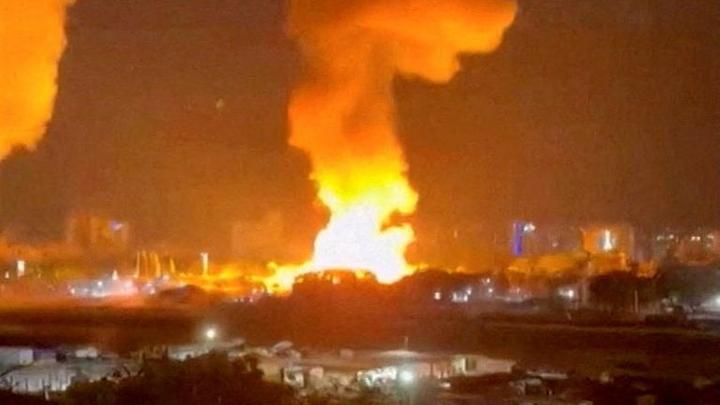
How the collapse of the old elite and the social gains of the Bolivarian Revolution under Chávez were undermined by internal contradictions and the ‘Dutch Disease.’ The crash in oil prices combined with harsh U.S. sanctions pushed Venezuela under Maduro into hyperinflation, a humanitarian crisis, and a neoliberal turn aimed at preserving the ruling order. A look at the ‘burned dragon’ caught between internal failure and imperialist aggression.
The fact that we are addressing this topic right now has nothing to do with a desire to work through all the “Comandantes” of history, but rather with the current situation in Venezuela. Since September of this year, the United States has destroyed 20 Venezuelan vessels accused of smuggling drugs to the southern coast of the USA. These attacks claimed 79 lives – evidence for their alleged involvement in drug trafficking has yet to be presented. Furthermore, the New York Times revealed last week that Donald Trump approved covert CIA operations against the Venezuelan government under Nicolás Maduro – a revelation that Trump himself (for not entirely comprehensible reasons) confirmed.[1]
When the term “Comandante” is mentioned anywhere in the world, two personalities come to mind: Ernesto Che Guevara and Hugo Chávez. We have already reported extensively on Guevara – and Cuba – in our article “Cuba: Despite Everything”. Now we turn our attention to his Venezuelan counterpart, Hugo Rafael Chávez Frías, and thus to Venezuela – the country whose leader Fidel Castro once described as Cuba’s closest friend.
Simultaneously, the United States has stationed large parts of its Southern Command in the Gulf of Mexico, including the world’s largest aircraft carrier. Representatives of the US government openly speak of a war against Venezuelan drug cartels, allegedly led by President Maduro himself.
Venezuela possesses the world’s largest heavy oil reserves. While it would be too simplistic to attribute the increasing US aggression solely to an interest in Venezuelan oil, given the historical context, this suspicion certainly arises.
So now we want to take a look at Venezuela. More concretely, in this article we will examine the history of Venezuela before, during, and after the “Bolivarian Revolution,” and how it was sabotaged by the “hybrid warfare”[2] of the United States. Ultimately, however, we conclude that the “case” of Venezuela is not primarily due to external influences, but to fundamental contradictions and internal errors of the Bolivarian project.
Since Chávez’s death (2013) and Nicolás Maduro’s term in office, much has changed – we view many of these changes under Maduro critically, and we will address them as well. Finally, we will look at why the United States is stoking the cold war against Venezuela right now and what implications this could have for the region and Venezuela’s partner states.
Some may find the title of the “Bolivarian Revolution,” which we will use in the following, unfamiliar, so a brief note on the namesake of that movement:
Simón Bolívar, known as “El Libertador,” was an independence fighter who lived between 1783 and 1830 and led the liberation of Latin America from Spanish colonial rule. Later, he became the founder and Bonapartist-style ruler of Gran Colombia – that short-lived federation of states which today comprises Colombia, Ecuador, Panama, and Venezuela. In all these countries, Bolívar is still considered a national hero; the former Upper Peru even renamed itself Bolivia in his honor.
He himself was the son of a wealthy Creole family, thus part of the elite in the Spanish colonial system, but after accidentally attending Napoleon’s imperial coronation during his European travels, he turned to a radical republicanism. He was almost obsessed with Jean-Jacques Rousseau and other republican thinkers of the Enlightenment, but on the other hand, he was a massive admirer of Napoleon and a student of the Venezuelan early socialist Simón Rodriguez.[3]
After the crushing of the First Venezuelan Republic and the proclamation of the Second, and after years of fighting against the Spanish colonial army, Bolívar united Venezuela and New Granada (today’s Colombia) into the República de Colombia – the so-called Gran Colombia. Later, Ecuador, Panama, Peru, and Bolivia also joined. But the goal of a republican, pan-American federation was never fully realized. After fierce power struggles, Bolívar – to protect the young great republic – appointed himself as a dictatorial sole ruler, following Napoleon’s example. Nationalist tensions and regional rivalries eventually led to the dissolution of Gran Colombia in 1830 – in the same year that Bolívar died of tuberculosis.[4]
Marx reported quite extensively on Bolivar in the New American Cyclopaedia, where he wrote:
„Bolívar is a man of the most extraordinary abilities; but at the same time the most cowardly, mean and miserable of blackguards. […] His military achievements were nothing but a series of defeats, compensated by treacheries and acts of cowardice. […] He was no liberator. He wanted independence only that he might rule. […] the worship paid to Bolívar is the result of ignorance and superstition.“[5]
Marx thus saw him in a line with the Haitian dictator Faustin Soulouque as primary protagonists of Bonapartism.
In the historical narrative of the former Gran Colombian states – especially Venezuela – Bolívar embodies the liberation of South America from the European colonial powers that had ruled the continent since the Treaty of Tordesillas in 1494.
Bolívar thus stands symbolically for independence itself. Accordingly, the “Bolivarian Revolution,” which we will discuss in detail later, understood itself as a continuation of this historical struggle for freedom and self-determination.
In 1958, a broad civilian and military movement overthrew the Venezuelan dictator Marcos Pérez Jiménez. Under his rule, characterized by corruption and patronage, the repression of politically dissenting, namely leftist, opinions was part of everyday life. For his persecution of communists, he received the Legion of Merit from US President Dwight D. Eisenhower in 1955.[6] His term of office shows parallels in many respects to the rule of Fulgencio Batista in Cuba, which ended in the same year.
The movement, which had already organized massive demonstrations in the country’s major cities the year before, formed a broad united front – from the conservative Partido Socialcristiano (COPEI) to the Communist Party of Venezuela (PCV). The resignation of Pérez Jiménez was finally forced by a general strike organized by the communist party’s union base. Jiménez first fled to Miami and later to Franco’s Spain, where he died in 2001.
The end of Jiménez’s dictatorship was followed by the Punto Fijo Pact, in which the social democratic Acción Democrática (AD), the conservative Partido Socialcristiano (COPEI), and the liberal Unión Republicana Democrática (URD) joined together to form a rigid political succession regime. The era of Puntofijismo lasted de facto until Chávez’s election in 1998.
With the Punto Fijo Pact, a two-party rule between Social Democrats and Conservatives was cemented, similar to the US electoral system today.
The rigidity of the system, i.e., the prevention of a full bourgeois democratic opening, stemmed from the concern that the Communist Party would possibly gain massive influence in a truly representative democracy:
„Acción Democrática and Copei both had large memberships. You joined a party to get a job, and to keep it. The party leaders, and the bosses of their tame trade unions, grew accustomed to the perks of power, and particularly to the pickings from the blossoming state industries created from the revenues from oil. Corruption on an almost unimaginable scale became endemic, particularly within the ranks of Acción Democrática but also in the wider banking and commercial community, and it snowballed with the years. The corruption and conspicuous consumption of the Venezuelan political elite became famous throughout the continent. They also created a deep anger within the poorer strata of society, and an unquenchable desire for revenge.“[7]
The first president of this pact, Rómulo Betancourt (AD), who had already held the presidency between 1945 and 1948, was militant in the Communist Party of Costa Rica in his youth but had moved to mild social democracy by the time of his presidency.
The pact emerged during a phase when communist influence in Latin America was experiencing its first major bloom. A now declassified internal CIA document titled “Communist Penetration of Latin America” (1959) estimated that between 1958 and 1959 alone, the number of members of communist parties in the region had risen by about 15 percent. The Communist Party of Venezuela (PCV) was the second-largest communist party in Latin America in 1958 and possessed, according to the report, “strong influence” on students, the press, and especially on the organized working class, where it dominated alongside the social democratic party. In the capital district, “where Betancourt is weak,” it even had significantly more influence than the parties of the pact. [8]
In his historiography “We Created Chávez,” George Ciccariello-Maher writes:
„While Betancourt rode to power on the radical energies unleashed among the popular masses, he was nevertheless deeply suspicious of those who demanded radical rather than gradual change, those who sought socialism over capitalism […] As a result, and against this radical alternative, Betancourt and others sought to construct a democratic system that was protected from the people, in which all demands were to be diverted though institutional channels and specifically the two predominant political parties. This was a system of democracy as institutionalized antidemocracy, in which the people could only appear as a fragmentary and segmented nonpeople.“[9]
During Betancourt’s term, about 70 percent of agricultural land was owned by just 2 percent of the population. In 1960, about 350,000 peasants were completely landless. Due to the lack of economic diversification, Venezuela at that time – despite massive oil exports – faced declining dollar reserves and a growing budget deficit. Material for a later déjà-vu.
Betancourt’s policy was deeply contradictory. Thus, although he himself was responsible for establishing the party dictatorship in Venezuela, he asked US President Kennedy that “the United States should cease to back autocrats,” not out of his own democratic conviction, but because “the consequence of continuing to back [autocrats] would be more revolution.” [10]
Betancourt’s Venezuela became a bulwark against the Cuban Revolution; Betancourt pushed for Cuba’s expulsion from the Organization of American States[11], his party received active financial support from the United States, and he began the “Pentagonization” of the Venezuelan army, i.e., the import of US military advisors to train against communist guerrillas.[12]
At the same time, and little known to many, Betancourt played a key role in the creation of OPEC. Venezuela, as the world’s most oil-rich country, or rather Betancourt’s then Minister of Mines, Juan Pablo Pérez Alfonzo, convinced the oil-rich states of the Middle East – Kuwait, Saudi Arabia, Iraq, and Iran – in cooperation with Egypt’s President Gamal Abdel Nasser, to sign an initially secret declaration on national control of their oil resources:
„His agreement called for the creation of an oil consultative committee among these countries in order to improve their oil revenues. The seed of OPEC was thus planted.“[13]
During Betancourt’s term, many communists and other opposition members joined together to form guerrilla groups. Following the Cuban model, they operated from the mountains of Venezuela and carried out isolated attacks on state institutions and representatives of the government, as an expression of their resistance against the political order perceived as a sham democracy.
The most important of these guerrilla groups were the Fuerzas Armadas de Liberación Nacional (FALN), founded by the Communist Party, which, despite its protagonist role in the coup, was politically disenfranchised. Besides the FALN, the Movimiento de Izquierda Revolucionaria (MIR) split off from Betancourt’s social democratic AD party.
In the 1960s, the revolutionary mood, especially among Venezuelan youth, was almost omnipresent. The greatest influence on this was the Cuban Revolution – and Fidel Castro himself, who reported on the success of the 26th of July Movement during a visit to Caracas in January 1959. Just a few days later, about 80 percent of the young members of the AD split off and founded the Movimiento de MIR.
Decisive for this break was probably above all Betancourt’s rejecting attitude towards Castro, which alienated many young cadres of his party:
„Perhaps surprisingly and certainly ironically, given Betancourt’s hysterical hostility to Castro-Communism, this new party, the Revolutionary Left Movement (MIR), twisted the knife in the wound of their separation by explicitly avowing the Cuban example. These were the same young AD members[…] who had been responsible for creating the alliance with the Communists that had overthrown Pérez Jiménez successfully, partly against the wishes of the party’s exiled leadership.“[14]
In the following years, the MIR, the FALN, and other groups carried out a series of partly well-planned actions. Often, parts of the military were also involved – either out of their own communist conviction or due to direct connections to the guerrilla groups.
Among the most famous uprisings of this time are El Barcelonazo (1961), in which about 200 soldiers occupied the Pedro María Freites barracks, El Carupanazo (1962), in which about 500 soldiers took the city of Carúpano, and El Porteñazo (1962).
The latter was the largest and at the same time the last of these large-scale uprisings: Members of the Communist Party and the MIR activated their cadres within the army, and several thousand of them finally occupied the port city of Puerto Cabello. The government responded with massive force and ordered the bombing of the city. The fighting lasted three days, claimed about 400 deaths, and left more than 700 injured. The famous photo “Aid from the Padre” by photographer Héctor Rondón, showing a priest assisting a wounded soldier, became one of the most iconic images in Venezuelan history.
After the failure of the uprising, the Communist Party and the MIR were banned:
„Immediately after the May rebellion at Carúpano, both the MIR and the PCV, harassed and repressed since 1960 and operating largely underground and without press freedoms, now found themselves officially banned by presidential decree (the PCV for the first time since the dictatorship that it had helped to overthrow).25 For many, the only path left open was the armed struggle.“[15]
Numerous army officers joined the guerrillas over time. To unite the various groups, former officers and cadres of the MIR founded the Fuerzas Armadas de Liberación Nacional (FALN) in 1963 as an umbrella organization for the armed struggle against Betancourt and the Puntofijismo system.
The FALN carried out numerous urban actions until the following year, including the bombing of the US embassy in Caracas, the attack on a US department store, sabotage acts against oil pipelines, and several political kidnappings. However, the plan to sabotage the 1963 elections or mobilize a broad mass base for a boycott failed.
Despite sabotage attempts and individual attacks, the guerrilla groups’ attempt to achieve an election boycott through mass mobilization was unsuccessful: Over 90 percent of registered voters cast their votes. In the capital Caracas, the FALN had led a general strike ten days before the election – but in the process (no joke) almost exhausted their entire ammunition, so that on election day no shots were left:
„The result could not have been worse for the armed struggle: not only did 90 percent of the electorate go to the polls, but Raúl Leoni, an old-school adeco of Betancourt’s own stripe, won. A revolutionary situation had been squandered once again, and the urban guerrillas, alongside their rural counterparts, spent the years 1964 through 1967 searching for a “new path.”[16]
The Venezuelan communist politician Teodoro Petkoff described the defeat of the guerrilla groups in 1963 as their “swan song.” [17]
The new president Raúl Leoni, known for his political “extravagance”[18], took over the presidency in 1964 and continued Betancourt’s line, only with harsher means.
Under the pretext of a policy of “Pacifying,” Leoni, continuing Bentacourt’s policies, acted massively against alleged communists, guerrillas, and opposition members. For this purpose, extensive prison camps were established in the guerrilla-influenced areas, an unknown number of alleged guerrillas were executed, systematically tortured, and entire regions were carpet-bombed.
Some of the guards and torturers came from the USA and were apparently specifically sent to Venezuela to combat the resistance. The tactics were strikingly reminiscent of Fulgencio Batista’s approach to fighting the Cuban guerrillas a few years earlier. Leoni brought innovation with the idea that one could simply throw the opposition members to their deaths from helicopters – an idea that Chile’s Augusto Pinochet would copy about ten years later:
„Many agree that the later years of the armed struggle were even more violently repressive than those of Betancourt himself. […] New theaters of operation (TOS) were established and included what many now term “concentration camps,” and the colonial prison-turned-barracks at San Carlos was reopened to house political prisoners. […] it was there that nearly every guerrilla from the Páez Front with whom I spoke had been imprisoned and tortured under the direction of an unknown American who barked out orders in English. Some were burned with a hot iron, some with raw garlic, others were covered in feces, whereas most were simply executed or thrown from helicopters to their death.“[19]
During Leoni’s term, Castro repeatedly sent Cuban soldiers to Venezuela to train or at least rescue the Venezuelan guerrillas – without success.
Under the weight of repression, many survivors sought a way back to legality. The armed struggle, born from the revolutionary energy of the 1960s, was thus largely militarily and politically neutralized by the late 60s.
The tense class relations of the 1960s and early 1970s eased, at least temporarily, with Carlos Andrés Pérez (AD) and the decade of “Venezuela Saudita,” also known as the “Golden Years.”
In 1973, at the beginning of the Yom Kippur War, the core OPEC (Iran, Iraq, Kuwait, Saudi Arabia) decided to impose oil embargoes on states that continued to militarily support Israel, if they rushed to Israel’s aid during the war: They rushed to Israel’s aid – whereupon OPEC reduced its production volumes by five percent.
The price per barrel subsequently rose from about 1.80 US dollars in 1971 to over 11 US dollars in 1974. Venezuelan state revenues skyrocketed, gross domestic product grew rapidly, and Venezuela became the largest oil exporter outside the Middle East [20]– with a production of over 3.3 million barrels per day.[21]
This pattern repeated itself during the turbulent 1970s for the Middle East: In 1975, the Lebanese Civil War began, in the same year Israel illegally occupied Southern Lebanon (Operation Litani), and in 1979 the Iranian Revolution followed. Each of these turbulences meant for Venezuela that the Western industrial states bought their oil, withheld by core OPEC, in Caracas.
President Carlos Andrés Pérez, who ruled from 1974 to 1979, used this sudden windfall to modernize the state. In 1976, he nationalized the oil industry, previously controlled by international corporations like Shell and Exxon, and founded the state-owned company PDVSA.
The United States, which had overthrown Iran’s Prime Minister Mossadegh for a similar endeavor barely two decades earlier, tolerated this nationalization given their immediate dependence on Venezuelan oil:
„President Carlos Andrés Pérez of Acción Democrática, an archetypal Third World leader with a penchant for stealing from the state, ruled from 1974 to 1979, and took the strong statist line that was popular at that time. Shell and Exxon and other foreign oil companies were nationalised, and state money was poured into the development of industry, to the applause of left-wing nationalists everywhere. Such was the flow of oil money in those years that even today there is still much visible to show for it, mostly in the southern region of Guayana: iron ore extraction, smelting operations, steel and aluminium plants, industrial complexes, and the gigantic hydro-electric dam at Guri on the Caroní river, capable of supplying Venezuela’s electricity needs – and those of much of northern Brazil as well.“[22]
The poverty rate fell to below 20 percent, the Venezuelan GDP grew from 19.9 billion USD (1973) to 56.6 billion (1979) – a tripling in six years.[23] The capital Caracas transformed into a modern metropolis with skyscrapers, highways, and a growing middle class that converted the newly gained wealth into consumption.
Imported luxury goods, expensive cars, and travel abroad became symbols of this new oil class: The expression “Dame dos” (“Give me two”), with which the owning and manager classes of Venezuela shopped abroad, is often used to characterize this new wealth of the upper classes:
„The petrodollars turned a scrawny state muscular, built roads, railways, barracks, schools, then, after oil prices quadrupled in the 1970s, skyscrapers, shopping malls, the Caracas metro. The wealthy flew to Miami for shopping weekends and became famous for their delighted squeal: “So cheap, give me two!”[24]
Perez pursued a “Statist Line” in expanding social infrastructure: The dominant union (CTV), in which an above-average number of workers were organized by Latin American standards, was subordinated to Perez’s AD party and closely tied there to the corruption-ridden bond between party and oil industry[25], strikes were declared completely illegal for years, and any workers’ representation was bureaucratized to the point of “Uselessness”…:
„At first, however, the oil bonanza masked this tendency, as Pérez instituted a number of pro-labor policies: Venezuela’s first minimum wage, job security for low-wage workers, and price regulations on basic goods constituted real gains for workers.“[26]
So Perez channeled enough of the oil revenues to the working Venezuelans to prevent the rapid intensification of the bond between financial and political capital, the devaluation of union influence, and the drastic reduction of workers’ rights from having any significant impact on the contradiction between capital and labor.
In short; Yes, you couldn’t strike anymore, but your wage was higher and your work bus was more modern. Perez’s social policy of the 1970s thus resembled Juan Perón’s first term in office in some respects.
Even under Perez, the first symptoms of the so-called “Dutch disease,” i.e., the neglect of other economic sectors in favor of the winning sector, became apparent. Perez’s government and the associated capital used the sudden surplus of petrodollars to develop a secondary processing of the oil industry, but neglected other sectors, especially agriculture, massively.
The consequence was a massive increase in imports, even of goods that had been produced domestically in the previous decade – imports increased by an average of 33.7 percent annually between 1973 and 1978[27]. The national agricultural economy could not compete with the prices of imported goods, and agrarian substitutions decreased massively in favor of the oil economy.[28]
This was followed by a rural exodus of approx. 100,000 people annually, seeking work in the urban fringes of the oil centers.[29] Thus, the Barrios, filled with informal job seekers and workers, formed, or rather expanded, which would make the consequences of the “Dutch Disease” known to all about ten years later:
„This meant that a profound paradox came to shape Venezuelan democracy and society: while oil offered the promise of collective abundance, it also undermined that promise by building distortions into the national economy and organizing politics above all around the capture and distribution of petroleum rents.“[30]
Thus, despite the oil boom and the massive increase in state revenues, enormous foreign debts accumulated to finance imports. Between 1975 and 1979, the national debt tripled, with the expensive compensated nationalizations of the foreign oil companies alone requiring the taking on of billions in loans. Oil revenues accounted for 70 percent of all state revenues and 26 percent of the entire GDP.[31]
In retrospect, this policy may seem reckless: massive borrowing in the midst of a boom to finance large-scale, often poorly diversified infrastructure projects. But in the context of the time, it was the only realistic option to gain national control over the oil industry without sharing the fate of Allende or Mossadegh. After the Chilean coup of 1973 and in the face of massive US support for opposition groups, a non-compensated nationalization was politically hardly feasible. At the same time, the close interweaving of oil capital and political elite meant that considerable funds were directed into prestigious but economically questionable projects like the Guri hydroelectric plant.
When Luis Herrera Campins took over the presidency in 1979, people in Venezuela spoke of a “mortgaged country.” The new government inherited an overheated state apparatus, high foreign debt, and an increasingly dependent economy that was still fixated on the oil wealth of the 1970s.
In the early 1980s, with a debt of about 37 billion US dollars, the country was one of the four most indebted states in Latin America.[32] A significant part of this debt had been taken on short-term, making the country particularly vulnerable when the Latin American debt crisis broke out. In 1981, oil revenues peaked at about 19.1 billion US dollars, accounting for about 95 percent of total exports[33].
From 1981 onwards, a drastic decline in oil prices set in, hitting the previously booming oil exporters of Latin America hard: On the one hand, the restrictive US monetary policy under Paul Volcker led to sharply rising interest rates on international loans, causing debt service costs for the variable-rate loans taken out in the 1970s to explode. On the other hand, the demand for oil fell due to the beginning global recession, and the emergence of new oil fields, especially in the North Sea, increased the global oil supply.
This development weakened the price hegemony of OPEC and led to a massive collapse in oil prices. As early as the following year, Venezuela’s oil revenues fell by about 20 percent, and between 1981 and 1983, total export earnings fell by about 30 percent – from 19.3 to 13.5 billion US dollars.[34]
Simultaneously, after the Mexican debt crisis (or the raising of the US prime rate), massive capital flight began throughout Latin America, including Venezuela: In the first two months of 1983 alone, about 2 billion US dollars left the country, summing up to about 8 billion over the course of the year.
To stabilize the officially fixed exchange rate of 4.30 Bolívar per US dollar, the central bank massively drew on its foreign exchange reserves. By selling US dollars on the market, the supply of foreign currency was to be increased and thus the Bolívar supported against the dollar. At the same time, however, declining oil revenues and increasing capital flight meant that the central bank’s reserves sank to a critical level.
Between 1979 and 1983, real gross domestic product shrank by an average of 1.3 percent annually. Unemployment reached hitherto historic highs of about 20 percent[35], while inflation during the same period was about 15 percent per year.
At the same time, corruption and mismanagement increased dramatically. A considerable part of public expenditure flowed back to political networks through overpriced prestige projects, bribes, and kickbacks.
On February 18, 1983, “Viernes Negro” (Black Friday), the Venezuelan banking system remained closed. The government of President Luis Herrera Campins, confronted with an almost empty foreign exchange stock of the central bank, declared the state’s insolvency and devalued the Bolívar by 100 percent.[36]
From 1961 to 1983, the exchange rate had remained constant at 4.30 Bolívares per US dollar – But the rapid decline in foreign exchange reserves, caused by massive capital flight, forced a devaluation of the Bolivar to maintain solvency towards international creditors: In the two years before the crisis, an estimated 90 billion US dollars were taken out of the country, while foreign debts already amounted to about 37 billion US dollars in 1980.[37]
This development was not an isolated Venezuelan phenomenon, but part of the Latin American debt crisis triggered by Mexico’s insolvency in 1982. In the 1970s, many states in the region had accumulated enormous foreign debts in a US-promoted credit boom (see debt trap).
However, the combination of falling commodity prices, rising global interest rates, and the restrictive monetary policy of the industrialized countries made the mountains of debt unbearable:
„The government also defaulted on its foreign debts of $27.5 billion, of which some $18 billion in interest and principal would be due through the end of 1984. The state negotiated to restructure them; foreign banks accepted this but required that the International Monetary Fund make fiscal recommendations for Venezuela to follow.“[38]
Of the 27.5 billion US dollars in foreign debt, about 18 billion in interest and repayments were due by the end of 1984. Under the instruction of the international creditors and the International Monetary Fund (IMF), austerity measures were dictated to secure Venezuela’s solvency:
„Poor countries saddled with massive debts had no choice but to beg the IMF and World Bank for bailouts. The strings attached to these loans took the form of what has been called “structural adjustment,” but this polite term conceals a brutal reality. In practice, neoliberal reforms meant cutting wages, laying off teachers and other public-sector workers, cutting social-welfare spending, and privatizing public goods by selling off natural resources and services like water and gas—not to the highest bidder, but often to the highest briber. Under duress from international lenders, governments handed over their sovereignty by restructuring entire economies according to the dictates of the global market, giving foreign corporations free rein while they paid almost no taxes, and eliminating any and all price controls put in place to protect the poorest Latin Americans.“[39]
The import of consumer goods collapsed as a result of the foreign exchange controls, wages stagnated, and numerous companies got into payment difficulties. Although inflation fell as a result of restrictive monetary and fiscal policy from 21.6 percent in 1980 to 3.3 percent in 1983, this was less a success of stabilization policy than an expression of the economic collapse: consumption, income, and investment fell drastically, and gross domestic product fell by almost 5 percent in 1983 alone.[40]
The measures that the IMF enforced in Venezuela under Washington’s dictate (“Washington Consensus”[41]) forced drastic cuts in public spending, the lifting of price controls, the liberalization of interest rates, the reduction or abolition of state subsidies, especially for basic foodstuffs and gasoline, and the increase of tariffs for public services.
The goal was to reduce the budget deficit, secure the inflow of foreign capital, and guarantee the repayment of the foreign debt:
„The result in Venezuela and elsewhere was not the growth that neoliberal economists and ideologues had promised, but instead the exact opposite: what is referred to in Latin America as the “lost decade,” in which the only things that really grew were unemployment and poverty. By the end of the 1980s, nearly half of all Latin Americans were living in poverty, with nearly 70 million falling into poverty in that decade alone.“[42]
The result of this “shock therapy” was catastrophic. Venezuela experienced a massive drop in production and a rise in inflation, which climbed to 85 percent by the end of the decade. Real wages fell rapidly, while the proportion of the population living in poverty rose to over 44 percent – almost half of them in extreme poverty.
Unemployment increased, many small and medium-sized businesses went bankrupt, and dependence on imports intensified. The middle class, which had been a symbol of ascent in the 1970s, effectively dissolved.[43] State and private companies that were deemed unprofitable were often sold to foreign investors at bargain prices, consequently taking thousands of workers’ jobs.
The share of workers in the informal sector rose to 53 percent over the course of the coming decade, combined with massive unemployment meaning that by the end of the 1990s, only 20 percent of Venezuelans were in formal employment.[44]
The rural exodus, which was already evident in the 1970s, reached its peak with the discontinuation of most agricultural subsidies. The rapidly increasing poverty was evident on the edges of the oil metropolises: While the owning and manager classes continued to enjoy high (often higher) wealth thanks to privatizations, the inhabitants of the Barrios lived in complete impoverishment. These slums now consisted predominantly of informal dwellings, often built from cardboard and sheeting, where poor migrant workers lived. By the end of the 1980s, millions of poor Venezuelans lived under these conditions in the impoverished urban fringes[45]:
„They sprouted winding paths and crooked steps and turned into barrios, a word that according to tone can denote neighborhood or slum. Families lived here for generations, poaching electricity from power lines, hauling water up in buckets, neglected by successive governments. On one flank of the mountain they overlooked the Caracas of privilege, which nestled on the valley floor. On the other, which was in the state of Vargas, they overlooked fishing villages, the port of La Guaira, and beach resorts where the wealthy had weekend homes.“[46]
Thus, in these Barrios, where by the end of the coming decade 80 percent of Venezuelans resided,[47], amidst the seemingly unstoppable impoverishment, a counterculture to that of Caracas developed.
The residents organized autonomous neighborhood associations, popular assemblies, sports events, and self-defense militias that fought both against the growing drug crime and the recurring repression of the Venezuelan police:
„These militias were organic outgrowths of conditions in the barrios themselves. They emerged when neighbors got together and armed themselves to stamp out the drug trade and make their neighborhoods safe from gang violence and police repression. Since the police themselves were often complicit in the drug trade and the violence it wrought, the earliest collectives drove out the narcos and the police in the same gesture, taking responsibility for security in their local neighborhoods (some areas have not allowed the police to enter for more than twenty-five years).“[48]
Radical democratic state-within-state structures developed, with the individual Barrios organizing an “Assembly of Barrios,” in which “some 700–800 leaders and movement spokespeople”[49] routinely met to exchange and coordinate on the situation of the emerging self-management structures.
Breakaways from the unions bureaucratized under Perez, whose movement became known as “new unionism,” mostly formed the leadership of these self-management structures together with the successors of the guerrilla movements of the 1960s:
„The Barrio Assembly of Caracas had emerged as a sort of general assembly representing local groupings and functioning “as a center for the inauguration of social power in the country and as a coordinating agent for popular struggles.” In other words, long before Chávez’s election, long before the communal councils, and long before even the Bolivarian Circles and the Patriotic Circles that had preceded them, there were barrio assemblies, the fruit of a long history of revolutionary failures and experimentation and the motor force of a new Venezuela.“[50]
Barrios like 23 de Enero west of Caracas prohibited any Venezuelan state personnel, including police, from entering the Barrio.
The contradiction between capital and labor, so sharply illustrated by the stark contrast between oil capital in the cities and marginalized labor in the surrounding areas, was to come to a head in 1989 – “Caracas exploded.”
On the morning of February 27, 1989, the residents of the Barrios made their way to their mostly informal work in Caracas when they found out that the bus ticket price had now also doubled. The Venezuelan government had cut transport subsidies overnight in accordance with the IMF’s austerity plans. The workers and poor had had enough:
„Workers and students on their Monday morning commute into the capital, Caracas, decided they had had enough. Instead of simply paying the new fare, they began to burn buses, occupy bus terminals, and block streets. While their anger was initially focused on the bus drivers, it wasn’t long before they set their sights on the government. Burning buses soon gave way to marches and protests, broken glass, looted stores, and nearly a week of rioting across the entire country.“ [51]
Within hours, the rebellion spread to all of Caracas and finally nationwide. Students joined the protests, barricades arose, supermarkets and shops were looted – from basic foodstuffs to luxury items like imported whiskey or entire sides of beef. Young people from the hillside neighborhoods invaded the commercial centers and wealthy residential areas – the moment when “the hills came down.”[52]
President Perez declared a state of emergency – “Civil war-like conditions” followed. Special forces and the army were ordered to end the uprisings by any means necessary. They poured into the Barrios, where the self-management militias tried to defend themselves, shot indiscriminately at residential blocks, carried out mass executions, and dumped the bodies anonymously in mass graves:
„I remember that the police went up there above Apartment Block 22, and shoved the bodies in plastic bags, threw them below, picked them up with a truck and bam, that was that. And the same thing happened with the bodies on the road. They put them in plastic bags and threw them in a truck.”[53]
In the cities, snipers gathered on the roofs, soldiers fired automatic weapons at fleeing protesters – one recording of the massacres shows soldiers shooting at a group of demonstrators who are trying to rescue an injured comrade with their hands raised.[54]
A priest from the Petare-Barrio reported:
„A young man was tied to a window with handcuffs by one of the Metropolitan policemen … and with a lighter the police man began setting the young man’s arm on fire. The kid fainted in pain.“[55]
How many were concretely killed is unclear. The Venezuelan government spoke of 300 and legitimized the massacres with the alleged criminality of the protesters. Human rights organizations estimate 3000 deaths.[56]
The Caracazo popular uprising marked the slow death of the Puntofijismo system. Today, the “Boulevard of Dignity” in Caracas commemorates those murdered in the Caracazo.
For Hugo Chávez and the members of the Bolivarian Revolutionary Movement (MBR-200), the Caracazo functioned as a decisive “reactivation” of their revolutionary ambitions:
Chávez originally joined the Venezuelan army to play baseball, but there he developed a deep interest in military theory, political intellectual history, and the revolutionary teachings of Simón Bolívar. Influenced by thinkers like Mao, Clausewitz, Napoleon, and Sun Tzu as well as Venezuelan figures like Bolívar and Ezequiel Zamora, he formed an independent, at times contradictory, synthesis of military, nationalism, internationalism, anarchist theory, social democracy, and state socialism.
A crucial impulse came in 1974 through his visit to Peru, where he encountered the military government led by General Velasco Alvarado, which first confronted him with the idea of a national-revolutionary army. Just two years later, he was himself tasked with combating the remnants of the communist guerrillas in Barinas – a task in the course of which he developed “sympathy for the guerrillas that his battalion was supposed to be fighting.”[57]
Thus, Chávez began to turn away from the existing system as early as the mid-1970s. He founded his first small conspiratorial group in 1977, the Ejército de Liberación del Pueblo de Venezuela (ELPV), and formulated in his diary the claim to follow a historical mission, begun by Bolivar, to revolt.
In 1982, together with comrades, he called the Movimiento Bolivariano Revolucionario – 200 (MBR-200) into life, founded on the “three roots” of Bolivarianism: Bolívar, Simón Rodríguez, and Zamora. This movement understood itself as a civil-military alliance that wanted to realize “Socialist Nationalism” in Venezuela. Militarily, Chávez had risen to the rank of commander by the 1980s and enjoyed the loyalty of about 10 percent of the entire Venezuelan army until 1992.
As a result of the Caracazo, which Chávez himself called “genocide,” Chávez and his members began preparations for a coup d’état:
„It was only after the Caracazo that, according to Chávez, “the members of the MBR-200 realized we had passed the point of no return and we had to take up arms. We could not continue to defend a murderous regime. The massacres were a catalyst. […] Without the Caracazo we wouldn’t have been able to do it,” Chávez would later insist in an interview with Aleida Guevara (daughter of Che).“[58]
On February 4, 1992, the time had come: Five army units, led by Chávez, advanced on Caracas. The goal was the arrest of President Pérez and control of strategic military facilities, including the Ministry of Defense and the La Carlota military airport.
Pérez was to be intercepted at Maiquetía airport and brought to the Historical Museum, where the rebels wanted to coordinate the takeover of power.
The conspiracy had already been betrayed the day before; communication means were lacking, and many units refused to carry out their full orders. Pérez escaped several times: first from the airport, then from the La Casona residence, and finally back to the Miraflores Palace, despite attacks by the rebels.
Chávez’s troops at the Historical Museum came under fire, isolated from the rest of the rebel movement, and could not gain control of the capital. Elsewhere, however, the rebels recorded great successes; Chávez’s forces took control of several major cities, including Maracaibo, Valencia, and Maracay[59] and could count on the support of the arming population here – but not enough to complete the coup despite Chávez’s isolation:
„At this stage something rather extraordinary occurred. To avoid further bloodshed, Chávez asked to be allowed to speak on television so that the colonels who had seized barracks and cities in other parts of the country might also peacefully surrender. Individual officers, like Arias Cárdenas in Maracaibo, were still in control of their regions, but since the plot had failed in Caracas, there was no chance of countrywide success.“[60]
In his appearance, which lasted just over a minute, Chávez assumed sole responsibility for the failure of the coup and stated: “Unfortunately, for now (por ahora), the objectives we had set ourselves have not been achieved in the capital.”[61]
These words, “por ahora,” transformed Chávez into a national hero overnight. Richard Gott, who was in Caracas at the same time, attributes the cause of his rapid fame not only to the “por ahora” prophecy but especially to the fact that Chávez had apologized:
„No one in Venezuela had ever heard a politician apologise for anything before. In spite of the political and economic failures of recent years – the devaluation of the currency, the bank collapses, the trials for corruption, the economic decline – no one in a position of power had ever said sorry, or accepted any portion of blame. And now here was a military officer saying he accepted responsibility for something that had gone wrong. This was something entirely new.“[62]
By the 1993 carnival, there was an abundance of costumes depicting the “paratrooper with the red beret.”[63] For the workers and poor, the latter making up about 80 percent of the population in 1992, Chávez seemed like a way out of the Puntofijismo system, perceived as hopeless and characterized by corruption and mismanagement, for which in 1993 just over half of the voters went to the polls.
After the failed coup attempt, Chávez and his comrades from the MBR-200 faced 20 years in prison. However, President Rafael Caldera (COPEI), elected in 1994, ordered their release as early as 1994 – Caldera won the election precisely because of Chávez: In a famous speech before the Venezuelan parliament, he expressed his understanding of the coup, thus gaining massive sympathy among the voters enthusiastic about Chávez.
During the election, the communist party splinter La Causa R became the third strongest force with 22.5 percent. For Caldera and the rest of the traditional Puntofijismo elite, it was clear that the political status quo after the Caracazo was a different one:
„The political strength of the old parties was crumbling. The economic crisis, the Caracazo, the two attempted coups d’état, and their own internal dissensions were paving the way for catastrophe. […] The two left-wing parties were now significant players on the national stage. Both were eventually, after serious splits, to support Chávez.“[64]
After his release, Chávez could not return to the military and focused on civilian political structures. He used his prison time to study political theory and read works by Gramsci (of whom he had never heard before[65]), Marx, Engels, Mao, István Mészáros, Michael Lebowitz, and Trotsky.
Over the next few years, he traveled with his newfound fame through Latin America and visited Uruguay, Chile, Argentina, and Colombia, where he allegedly established contacts with the then still Marxist-Leninist FARC and ELN.
A crucial step was his visit to Cuba in December 1994, where Chávez met Fidel Castro, who assured him of his support. In Havana, he spoke before the packed Universidad de La Habana, expressed his admiration and solidarity with the Cuban Revolution, and contradicted Fukuyama’s thesis of the end of history:
„After 10 years of intense work within the Venezuelan Army, after one rebellion and another, now we are devoted to the revolutionary work. We are committed to that thesis that comes from the north […] that thesis of the end of History and the Last Man, of the technocratic era, that ideologies don’t work anymore – no. We reject that. […] Venezuela has immense energy resources. For example, no Caribbean or Latin American country should have to import fuel from Europe — why should they, if Latin America includes Venezuela, with its vast energy resources? Yet Venezuela continues to export two and a half million barrels of crude oil per day to developed countries, just as 500 years ago they took away our raw materials — today they continue taking them in the same way.“[66]
In the midst of the Cuban Special Period, Fidel hoped, in the case of a friendly Venezuela, for a new preferred oil supplier, after the collapse of the “oil exports at friendship prices” from the USSR plunged Cuba into its deepest crisis since the revolution.
In the following years, Chávez built up a close-knit political network that included both former comrades from the MBR-200 and veterans of the Venezuelan left.
Politically, Chávez bundled his activities in 1997 with the founding of the Movimiento Quinta República (Fifth Republic Movement, MVR), “a coalition of trade union activists, environmentalists, students, former military officers, and small left-wing parties”[67], which became his central platform for the 1998 presidential candidacy.
To mobilize the broadest possible support, he formed the Polo Patriótico alliance, which united various left-wing parties. In March 1998, the La Causa R splinter Patria Para Todos joined the alliance, in May 1998 the Movimiento al Socialismo (MAS).
Finally, the Communist Party (PCV) also supported Chávez’s campaign. This support from the left-wing parties effectively led to their marginalization as independent political actors, as Chávez’s popularity dominated the entire political dynamic.[68]
The election campaign itself took place against the backdrop of the complete collapse of the Puntofijismo system. The oil price fell to about 8 USD per barrel by 1998, 28.8 percent of the population were now in extreme poverty, and corruption had increased to a “ridiculous,” for all recognizable level.
Even after the Caracazo, nothing changed in the status quo, the 1990s were the second “lost decade” in a row, and possibly even worse than the first:
„This steep fall in economic and social indicators partially explains why voters were willing to support a candidate who promised an overhaul of the political system. […] The system was ready for any “newcomer,” and during the 1998 election several newcomers contended for office. But the electoral climate favored the newcomer who promised the most punitive policies toward the exist-ing parties. That candidate was Chávez.“[69]
Matt Wilde describes Chávez as the ideal type for Max Weber’s definition of charismatic authority. With often biblical rhetoric, Chávez appealed in the election campaign to the duty of Venezuelans to make more of themselves. In doing so, he drew on both Che Guevara and Salvador Allende as well as Simón Bolívar and Jesus Christ and addressed all strata of the Venezuelan workers and poor.
His style of speech was deeply moral, dramatic, and mostly colloquial. Precisely the anger at the existing – at neoliberalism, corruption, and Washington – was expressed by Chávez in every speech, which found a great hearing among the Venezuelan masses:
„Chávez is a genuinely original figure in Latin America. He is not a Marxist like Allende, or a populist like Perón. He is a radical left-wing nationalist, closer in his internationalist vision to that of Fidel Castro than to that of any other Latin American figure. He comes from the provinces of Venezuela, the son of two schoolteachers, and he has inherited their skills. He is a spell-binding orator and still has the didactic manner of a born teacher. He has the physical characteristics of a typical Venezuelan mestizo, with African and Indian features. He is a friendly and approachable man, always with a welcoming smile, and blessed with a great capacity to put people at their ease.“[70]
On December 6, 1998, Hugo Chávez won the presidential election with 56.2 percent of the vote. The MVR was the dominant force within the Polo Patriótico, and Chávez’s overwhelming popularity marginalized the supporting parties.
The election victory marked the end of the Puntofujismo system and the beginning of the “Fifth Venezuelan Republic,” whose first central goal was the refoundation of the state through a constituent assembly:
„By the time he was inaugurated in February 1999, the excitement of starting anew, turning the page, infected even those who had voted against him. When he took the dais of Congress to be sworn in, polls showed 90 percent of the country supported him. The priority, he declared, was a new constitution. The right hand aloft, the left resting on the constitution he had just vowed to expunge, he quoted a line from the Chilean poet Pablo Neruda: “It is Bolívar coming back to life every hundred years. He awakes every hundred years when the people awake.”[71]
Just a few weeks after taking office, Chávez initiated the process to create the new constitution promised during the election campaign. Through a national referendum, he let the population decide on the convening of a constituent assembly, which was approved in April 1999 with 88 percent yes votes.
In the subsequent elections to the Asamblea Constituyente, the candidates supporting Chávez, running as independents, received 91 percent of the vote and thus 119 of the 131 seats.[72] With the referendum and the establishment of the constituent assembly, Chávez could bypass the congress, still controlled by the Puntofijismo parties, in which the Chavistas held only about 20 percent of the seats.
For the purpose of drafting this new constitution, hundreds of “Constituent Circles and Constituent Committees of the Base,” which had been organized even before Chávez’s election, were consulted and tasked with shaping the constitution.[73] To discuss the constitutional drafts, assemblies were formed following the model of the Cuban CDR popular assemblies and neighborhood committees, where drafts were debated in consultation with the Constituent Assembly.[74]
The constitution, confirmed in December 1999 with 71 percent of the votes in another referendum, constituted the “Bolivarian Republic of Venezuela” – It enshrined the idea of a “participatory and protagonistic democracy,” in which citizens should no longer be understood merely as an electorate, but as active co-designers of the political order.
Housework was recognized as an economically relevant activity, granting women working in the reproductive sphere social security entitlements. The rights, culture, and independent economic organization of indigenous peoples and Afro-Venezuelans were protected comprehensively for the first time, including territorial autonomy and cultural self-determination. From now on, any land use by the government on indigenous land had to take place with their consent.[75] The grassroots democratic citizens’ assemblies were granted extensive self-management powers; they could now recall elected officials and judges at any time.[76]
The constitution understood itself as feminist and was at the time of its enactment possibly the most progressive constitution in the world:
„Venezuelan women did not merely import the framework of wages for housework from European feminism. In fact, exactly the opposite was the case; what emerged as an organic demand of the Venezuelan women’s movement was initially opposed by their European counterparts: when the CONG and other Third World feminists had put forth a demand for recognizing domestic labor at the international women’s conferences in Nairobi (1985) and Beijing (1995), this was firmly rejected by their First World colleagues, who allegedly feared that it would provide the basis for Third World women “to demand what is theirs.” It was this kind of response to the demand for wages for housework that led some activists to characterize Article 88 as “anti-imperialist.”[77]
However, it is important to grasp: The state restructuring was not socialist and did not understand itself as such. Although the constitution prohibited the complete privatization of the oil industry, it allowed cooperation with private companies. Three forms of property – private, mixed, and self-management („run by local community councils“) – were recognized. The abolition of private property, capital export, or wage labor was never part of the plan. The “social economy,” as the Chavistas understood the state restructuring, thus represented a – albeit extremely progressive – “Third Way” social democracy, with a special focus on local self-management and grassroots democracy. When the Chavistas spoke of socialism, it did not mean Marx-Engelsian socialism, but a “Third Way” social democracy that, in supposed revolutionary and anti-imperialist demarcation from the capitalism of the United States and the neoliberalism of the “lost decades,” called itself “socialism.”
In the New Yorker, one could aptly read during Chávez’s term (2007):
„If this is socialism, it’s the most business-friendly socialism ever devised […] The U.S. continues to be Venezuela’s most important trading partner. Much of this business is oil: Venezuela is America’s fourth-largest supplier, and the U.S. is Venezuela’s largest customer. But the flow of trade goes both ways and across many sectors. The U.S. is the world’s biggest exporter to Venezuela, responsible for a full third of its imports. The Caracas skyline is decorated with Hewlett-Packard and Citigroup signs, and Ford and G.M. are market leaders there. And, even as Chávez’s rhetoric has become more extreme, the two countries have become more entwined: trade between the U.S. and Venezuela has risen thirty-six per cent in the past year.“[78]
Criticism of the constitution was directed primarily against the strong accumulation of power in the executive, the undermining of the separation of powers through the abolition of the senate and the transformation into a unicameral national assembly, the extension of the presidency to six years with immediate re-election, the full control of the president over military promotions, and the “manipulation” of the constitutional process through the election of a separate constituent assembly in favor of the Chavistas. This criticism came mainly from the traditional political elites of the AD and COPEI parties, the private oil profiteers, the middle class, and the private media.
Others criticized that Chávez did not go far enough; he advocated the privatization of telecommunications, expropriated little, and concluded contracts with US-American companies:
„The traditional elites were so sure of entitlement and power they expected to control the comandante. As a candidate he let them think that, and in these early years of power he left their wealth untouched. His economic policies were moderate—he courted foreign investment and even moved to privatize telecommunications—to the point frustrated radicals accused him of neoliberalism. But he methodically attacked the elite’s sources of political influence, dissolving the old Congress, firing judges, purging state institutions. For good measure he insulted them, branding them, among other things, “rancid oligarchs” and “squealing pigs.” No president had ever spoken this way, least of all to those who felt they owned the country. Their cry of dismay resounded through the valley. We should have known! He is so vulgar, so uncouth. The elites were nervous. This was the language of class war. Their criollo ancestors had feared slave uprisings, and now it was their turn to scan the hills, fearful the drumming from Miraflores would awaken the barrios.“[79]
Parallel to the constituent work, the Chavistas initiated their first major social program – Plan Bolívar 2000. The plan mobilized about 70,000 members of the armed forces, who worked together with hundreds of thousands of civilian actors from the self-management structures in the areas of infrastructure, health, and nutrition.
The plan pursued several goals: improving the living conditions of the poorest sections of the population, rebuilding public facilities, and at the same time transforming the role of the military in society – Instead of a pure security institution, Chávez understood the army as a productive and social force for reconstruction after the ‘lost decades’. In the following years, he began to procure large quantities of weapons (especially from Russia); This included a contract for fighter aircraft, rifles, 100,000 Kalashnikov AK-103s, and 53 military helicopters worth four billion US dollars. This bilateral military trade continued over the following decades.
In practice, soldiers repaired roads and schools, built health centers, carried out vaccination campaigns, and sold food at subsidized prices. These measures not only had immediate material effects but also created a new relationship between the state, the army, and the population:
„In the Pro-País phase, the country was divided into 25 action zones, and some 40,000 soldiers and volunteers began work on the reconstruction of roads, health centres and schools, working with the local authorities. President Chávez told reporters that ‘mobile field hospitals’ would be dispatched to remote villages and slums ‘as if to a war zone’. In December 1999, after the terrible mud slides in the coastal state of Vargas, the war zone metaphor proved uncomfortably true.“[80]
The first phase of the plan (Pro-Pais) served the mobilization of armed forces and civilians and the restoration of roads, health centers, and schools. The second phase (Pro-Pátria) focused on the development of local self-management and the third phase (Pro-Nación) on the development of economic self-sufficiency and sustainable economic development, away from the “Dutch disease.”
At the heart of the Pro-Nación phase was the fight against corruption, which had developed to a peak during the “lost decades.” A Judicial Emergency Commission found that about half of the Venezuelan judges were corrupt or incompetent, leading to numerous dismissals.[81]
The Supreme Court was expanded to reform the inefficient judicial system, but the new appointments often led to a political appropriation of the judiciary by pro-government forces. In the administration, too, reforms and the creation of parallel structures aimed at bypassing the bureaucracy perceived as corrupt (often dominated by the old Puntofijismo forces).
At the same time, the concentration of resources in extra-budgetary funds like the Fondo de Desarrollo Endógeno (FONDEN) promoted an extreme centralization of financial power with the president and weakened parliamentary control.
Parallel to this, grassroots democratic counter-mechanisms emerged that could combat corruption through direct control from below. With the promotion of the Communal Councils (Consejos Comunales) from 2006, the Chavistas attempted to transfer power and resources to local communities.
These were to ensure transparency and accountability through social control committees (contraloría social). Activists, deputies, and local groups publicly denounced mismanagement, organized self-defense initiatives in the neighborhoods, and exerted pressure on authorities through direct actions. In some cases, corporatist-worker control (control obrero) was established in the nationalized industries, intended as a bulwark against bureaucratic mismanagement:
„The subtext running through such conversations was the belief that cor-ruption was an inevitable companion to the handling of money, with many people arguing that the CCs were merely a new setting in which a presumed national proclivity for thievery and viveza would inevitably occur“[82]
Simultaneously, a broad resistance to the Chavista anti-corruption campaign developed from the circles of the old Puntofujismo profiteers:
„Unions, bureaucracy, local, regional, and national politicians, private industry, suppliers, etc. sprang into action against the Socialist Plan, which is not surprising if one considers, on the one hand, the volume of earnings from corruption and, on the other, the billions of dollars that the National Executive planned to invest in the modernisation of the cvg’s industries.“[83]
The funding for the social projects anchored in Plan Bolivar was served by the restoration of state control over the oil sector, which became a core topic of the Chavista platform during the election campaign – the PDVSA had, in a process Matt Wilde calls “privatization-by-stealth”[84], during the second half of the lost decades largely transferred its ownership to private, foreign corporations and joint ventures.
Thus, the Chavistas decided with the “Hydrocarbons Law” to bring PDVSA back completely under state control, to raise license fees and taxes for foreign investors to 30 percent, and to bring all multinational joint ventures into 60 percent state ownership.[85] The reaction of the owning classes to these restructurings would manifest itself a few years later in one of the most unscrupulous coup attempts in Latin American history – but more on that later.
In November 2001, Chávez used the powers constitutionally granted to him to initiate a series of profound socio-economic reforms. These included the Land Law (Ley de Tierras), which expropriated (compensated) unused large estates and opened them up for agrarian reform. In the following ten years, about four million hectares of land (about the area of the Netherlands) were distributed on this basis to poor and landless peasants. Furthermore, Chávez ended the privatization of social security systems begun by President Caldera and put the aforementioned Hydrocarbons Law into force.[86]
It must be noted here once that even though these developments were positive, Chávez disappointed many truly revolutionarily ambitious Chavistas with his course, which many considered too gentle. Historians like Richard Gott, Matt Wilde, and Javier Corrales describe those 49 laws as “radical laws”[87] – but they weren’t actually that radical: Slow, insufficient expropriation only with compensation at market price, insufficient deepening of the decentralization process, and most importantly: The laws were drafted without the involvement of the thousands of new grassroots democratic units – that was disappointing for many and evoked memories of Perez’s promises during his second term.[88]
For the economic elite, however, they were enough: The then PDVSA director General Guaicaipuro Lameda, himself originally appointed by Chávez, publicly criticized the new laws and was subsequently dismissed. Shortly thereafter, Chávez’s long-time advisor Luis Miquilena also resigned, sealing the break between the government and parts of the old political class:
„His first years in power had created many enemies, and had increasingly irritated the country’s white elite. They disliked his radical proposals for land reform, and they hated his plan to halt the programme of oil industry privatisation devised by previous governments. Most of all, they feared his mobilisation of the poor. Senior generals, conservative businessmen, oil executives and media moguls began to conspire against him – to seek his overthrow. By the end of 2001 this burgeoning opposition had formulated plans to stage a coup d’état on the Pinochet model. […] after a government decree of November 2001 that introduced a series of 49 radical laws. […] the ‘Bolivarian’ revolutionary process was beginning to change gear.[89]
These conflicts prepared the ground for the political escalation that culminated in the 2002 coup attempt. The alliance between the employers’ association (Fedecámaras), the conservative trade union federation (CTV) dominated by the old political elite, and the major media houses formed the Coordinadora Democrática, which openly sought the overthrow of the government.
The private media houses began at the end of March 2002 to run calls for protests in all major Venezuelan newspapers[90] – Venevisión, the largest private television station in Venezuela, ran “back-to-back” ten different “Propagandas paid for by the Venezuelan opposition movement”[91].
In total, 700 individual anti-Chávez advertisements were run on private television in preparation for the coup. Venezuelaanalysis provides a transcript of one of these ads:
„A big “NO” appears in red letters. Smaller letters state “Don’t be deceived” and a male voice narrates the same. The same voice continues, as the written words appear, “In this country, our country, there is only one person responsible for so much abuse, impunity, anarchy and lack of governance.” [A fast paced music builds in the background]; A women’s voice narrates, as the written words appear over an image of thousands of opposition marchers in the streets, “Venezuela, don’t be deceived.” […] male voice, “Here, there is only one responsible…”; cut to yellow screen, the words appear as they are yelled by a chorus of angry people, “Not one step back, OUT, GET OUT NOW.” Ends with the Democratic Coordinator logo.“
Author and lawyer Eva Golinger describes this media campaign as “the first media war in world history” (although we might disagree here):
„Although tools of propaganda and use of the mass media to further political aims have been characteristic of previous conflicts, wars and political strategies, the case of Venezuela evidences the first time that the media, as a powerful, private actor, has waged war against the people in order to advance its own agenda. Public access to media and diversity of voices have been usurped by private media moguls in Venezuela propagating their own political and economic aims.“[92]
The United States was aware of the concrete planning of the coup preparations throughout: On April 6, the US intelligence services deliberated on the “Conditions Ripening for Coup Attempt”.[93] In the months before, the coup plotters repeatedly visited Washington and received here a “go-ahead for their schemes” [94], including material support in unknown amounts.[95]
However, it would be reductive to attribute the conditions for the coup solely to the will of Venezuelan or US-American capital. By 2002, support for Chávez had declined in almost all population groups.
Brian A. Nelson summarizes the central causes in five points in his renowned work The Silence and the Scorpion, which deals in detail with the coup: firstly, the growing perception of Chávez as authoritarian, particularly through the de facto sole passage of the 49 laws (see above); secondly, the open confrontation with private media houses, which further intensified their hostility towards Chávez; thirdly, the increasing politicization of the military and the promotion of loyal cadres; fourthly, the implementation of social programs perceived as too slow; and fifthly, his foreign policy rapprochement with Iraq, Iran, Libya, and Cuba, which met with displeasure both domestically and internationally (especially from the United States).
Remarkably, Nelson sees the close relationship with Cuba as the main reason for the growing discontent of certain parts of Venezuelan society with Chávez:
„Yet most detrimental to Chávez’s popularity was his relationship with Fidel Castro. The extent of the close friendship between Chávez and the Cuban dictator came to light in the fall of 1999 when the newly elected Chávez went to Havana on a state visit and was seen playing baseball and warmly embracing Castro. Trade agreements and more state visits quickly followed. Venezuela “is going in the same direction, toward the same sea where the Cuban nation is going, the sea of happiness,” Chávez said fa- mously, encapsulating his desire to remake Venezuela in Cuba’s image. […] It was in response to this “cubanization” that the opposition movement against Chávez was born“[96]
We also find this explanation too simplified, but it is interesting nonetheless.
On April 11, the Coordinadora Democrática called for a general strike and organized a march of up to a million people demanding Chávez’s resignation. The demonstration was rerouted towards the Miraflores presidential palace. Around 12:30 p.m., Chavista counter-demonstrators gathered there to protect the presidential palace. When the march approached around 2:00 p.m., the National Guard fired about a dozen tear gas grenades from behind the palace walls – the demonstrators fled back.
As other routes were blocked by the National Guard, many moved to the Baralt Boulevard where hundreds of pro-Chávez counter-demonstrators threw large stones, Molotov cocktails, and tear gas towards the demonstrators. The police and Metropolitane under the opposition mayor tried to separate the groups with water cannons.
From the Barrios, “millions of poor Venezuelans in a seemingly spontaneous fashion”[97] rushed into the ranks of the Chavista counter-demonstrations, which grew to a “comparable” mass in the following hours.[98]
After a television address by Chávez at 3:45 p.m., shots were fired and the crowd began to disperse. The police fired back, and there were also impacts on armored police vehicles. First patients arrived at the Vargas hospital, where surgeons reported shots in the back of fleeing demonstrators and severe injuries from 7.62×51 mm cartridges. Later, similar numbers of pro-Chávez counter-demonstrators were also treated there.
In total, 19 people were killed according to official figures, most between 3:20 and 3:55 p.m., and over 150 injured – the actual number of deaths is unknown. The violence was concentrated predominantly at the Llaguno overpass.
To this day, there is no consensus on who was responsible for the deaths. The topic is, as unprofessional as it may sound, extremely fascinating:
Several military officers associated with the Coordinadora Democrática, including Vice Admiral Héctor Ramírez, stated in a video message shortly after the shootings that Chávez was responsible for the massacre. The message was broadcast by all private television stations and led to outrage among the majority of the Venezuelan population[99]. Later, however, it turned out that the corresponding recording had been made two hours before the deaths in the presence of several journalists. Richard Gott writes:
„One channel played a dramatic video, repeated throughout Thursday evening, showing a naval officer, Vice-Admiral Hector Ramírez Pérez, denouncing the government: ‘The President of the Republic has betrayed the trust of the people, he is massacring innocent people with snipers. Just now six people were killed and dozens wounded in Caracas.’ Only later was it revealed that the video had been recorded earlier in the day, in the presence of several journalists.“[100]
Luis Alfonso Fernández from the private station Venevisión apparently filmed shooters on the Llaguno overpass targeting the anti-Chávez demonstrations. Although it is not exactly clear from the video what the shooters were aiming at, the angle suggests the Baralt Avenue, where anti-Chávez demonstrators had gathered at that time. The video was shown in an endless loop on all private television stations.[101] However, as the Chávez-critical journalist Brian Nelson noted, at the time of the recordings (around 4:30 p.m.) there were no opposition members left on the Baralt Avenue:
„But in the feverish atmosphere of that night, nobody stopped to work out detailed timelines. For the private TV stations, Fernández’s tape was propaganda gold: the footage got played again, and again and again, and presented as evidence that the opposition march had been ambushed by government supporters.“[102]
Footage from the Irish documentary The Revolution Will Not Be Televised shows the snipers from a different camera angle, in which it can be seen that they fired hastily and in cover[103], suggesting a firefight with opposition shooters or the police under the opposition mayor.
Witness statements named two possible sniper positions: the Ausonia hotel and the Edén hotel. Some people arrested there were later released for lack of evidence; in only one of the suspects was merely an unloaded .38 revolver found – and it gets even stranger. Guardian journalist and Caracaschronicles founder Francisco Toro, who was in Caracas during the “April Crisis,” as he calls the coup attempt, writes:
„One of the most puzzling subplots here concerns the arrests made by the police at the Hotel Ausonia on the 11th, where several foreigners were arrested with guns, jailed until April 16th, and then released unconditionally by a court under the restored Chávez government. They immediately vanished. Who were they? The government has hinted they were opposition sharpshooters, but forensic tests did not show they had fired weapons recently. They were never questioned or arrested after the 16th, and may have been simple criminals who chose the wrong hotel at the wrong time. But who can be sure?“[104]
What is known and certain is that at least “a handful” of armed pro-Chávez civilians, possibly from the armed Barrio structures (the subsidized Bolivarian Circles), fired towards the opposition – with what success or how many actually fired is unknown, “because no serious investigation was ever carried out”.[105] It is also known that the police under the command of the opposition mayor Alfredo Peña fired on civilian demonstrators and looters from both sides – again, it is unknown how many were concretely killed – “I’ve heard stories of up to 50 looters shot dead” writes Toro.
In every Venezuelan private television station, the described recordings ran as alleged evidence of Chávez’s bloodlust in a continuous loop. International media took over the demonstrably fabricated representations of the private conglomerates as facts and solidified the narrative of the “Butcher” Chávez:
„If the Venezuelan media was consciously playing to its own population, it found the international press fertile ground for such misinformation as well, with media outlets in the United States and elsewhere uncritically parroting the now-discredited opposition line. Ray Suarez of PBS, for example, reported that, “Yesterday, Chávez ordered National Guard troops and civilian gunmen to fire on the nearly 200,000 protesters to stop them from reaching his palace.”[106]
Given the situation in Caracas, Chávez ordered the implementation of Plan Ávila, an army operation to restore order last used during the Caracazo (see above). The military leadership refused to carry it out due to memories of the 1989 massacres, and high-ranking officers, some of whom were offered higher career posts by the opposition, demanded Chávez’s resignation – and threatened to bomb the presidential palace (Miraflores) if he did not agree.
The routes to Chávez’s location in Fort Tiuna were blocked, so that loyal military personnel could not gain access to Chávez without the risk of an open civil war breaking out.
According to Rory Carroll and Richard Gott, Chávez had considered suicide as an option here, but was dissuaded from it by a phone call with Castro: “Chávez, do not sacrifice yourself, do not be a martyr like Allende, you must survive.”[107] So he decided, after a series of phone calls with political, church, and embassy representatives (including from Mexico, France, and China)[108] to negotiate a resignation with the mutineers: Chávez would resign if the 1999 Bolivarian constitution remained intact, his resignation was presented in the National Assembly, and the safety of the millions of Chavistas who had stormed into Caracas in solidarity the day before could be secured.[109]
The mutinous generals had met with “officers from the US military mission in Caracas” at this point – Chávez’s negotiation attempts were rejected.
To avoid further bloodshed, Chávez had no choice but to turn himself in to the generals and be arrested. Private media announced his resignation; “Chávez resigned; democracy restored”[110] – Chávez, who in provisional detention conditions still had access to a telephone and television, was able to contact the American television station CNN and Radio Havanna with the help of his wife, who quickly reported that Chávez had not actually resigned – that did not change the reporting of the Venezuelan stations.[111]
A few hours later, businessman and chamber of commerce president Pedro Carmona installed an interim government with himself at the head. The United States commented simultaneously:
„The details are still unclear. We know that the actions encouraged by the Chávez government provoked this crisis. According to the best information available, the Chávez government suppressed peaceful demonstrations. Government supporters, on orders from the Chávez government, fired on unarmed, peaceful demonstrators […] The government also tried to prevent independent news media from reporting on these events.”[112]
Carmona dissolved the National Assembly, the Supreme Court, and regional governments and suspended the 1999 constitution. The 49 laws appointed by Chávez (see above) were revoked, Venezuelan oil could now be privatized again – “in doing so he overstepped the limits of even many coup supporters.”[113]
In the same breath, the end of oil exports to Cuba was announced. The interim posts were filled with actors from the old political elite, the army, and capital representatives. Armed units were sent to intimidate the homes and families of Chávez supporters, the Cuban embassy in Caracas was surrounded, and the arch-reactionary “radical right-wing programme”[114] for a return to the pre-Chávez status quo was decided on April 12 at around 1:00 p.m.
The United States, the European Union, Colombia, and El Salvador were the first to recognize the coup government on the same day.
The course of April 12 and 13 would be surprising for both the coup plotters and the Chavistas.
The coup plotters from the ranks of the CTV union and army, who hoped for higher posts under the new government through their participation in the coup, were ignored by Carmona in their post-seeking. Carlos Ortega, chairman of the CTV trade union federation, had literally fled Caracas after the announcement of the new arch-reactionary status quo – even for the right-wing unionists, it was not tolerable to be named in the same equation as this “Pinochet reminiscent debacle”:
„This breakdown in the CTV-Fedecamaras alliance, at the most sensitive moment, may have been enough to doom the coup. So long as the anti-Chávez unions could claim to speak for both employers and workers, it could plausibly claim to represent the whole nation. With labor out of the equation, the movement was reduced to a right-wing power play.“[115]
Chávez loyalists like Vice President Diosdado Cabello and General Raúl Isaías Baduel refused to support Carmona. Generals involved in the coup came to the realization on April 12 that they might not be on the right side of the counterrevolution:
„General Vásquez Velasco, stunned by the sweeping illegality of Carmona’s regime, started to say out loud that in refusing Chávez’s order the day before, he had intended to protect the constitution, not to establish a de facto regime. The CTV continued to stay well away from Miraflores and rumors started to circulate more and more insistently that Chávez had not, in fact, resigned, and that no signed resignation letter existed.“[116]
By the evening of April 12, it was clear to all: Chávez had not resigned, he had been kidnapped. With the realization that their president had not resigned voluntarily, hundreds of thousands of workers and poor from the surrounding areas and the Barrios streamed into Caracas on the morning of April 13. These included the members of the government-affiliated Bolivarian Circles.
Officer Ramón Silva estimated, however, that about 70 percent of those who came to the aid of their elected president…
„did so spontaneously, comparing the mobilizations explicitly to the one constituent explosion that loomed largest in the Venezuelan psyche: “It didn’t surprise me that the people came down from the hills. It was nothing new, I experienced it in ’89 [Caracazo, s.o.] when those defiant hills [cerros bravos] came down.”“[117]
Within a few hours, every street to the presidential palace was filled by the likely several million[118] pro-Chavista demonstrators. Others streamed to Fort Tiuna, Chávez’s last known location. The police began to use water cannons, tear gas, and live ammunition against the Chavistas – “On that day, more human rights were violated than had been violated in the past, not three, but thirty years.”[119]
The private media ended all reporting on the counter-demonstrations; when switching on the television, Venezuelans now only saw “soap operas and movies.”[120]
Chávez-loyal military personnel, like General Raúl Baduel, mobilized their brigades to Caracas. Chávez’s, or now Carmona’s, honor guard marched into the presidential palace and arrested the coup plotters.
For the coup plotters and their army, who found themselves as an absolute minority against the mass of Chavistas on April 13, it was simply impossible to do anything against the numerically so superior crowd of counter-demonstrators. By now, almost absurd (unprofessionally said; touching) scenes were taking place in front of the presidential palace:
„Outside, the loyal officers acted as DJs before the enormous crowd, interspersing recordings of the protest songs of Alí Primera, the folk singer from the llanos, with short announcements that yet another provincial garrison had come out in support of the legitimate government.““[121]
Simultaneously, pro-Chávez troops stormed La Orchila and brought Chávez back to Caracas. The mutinous military personnel on site offered no resistance. The coup was over, the Bolivarian Republic restored, and Chavista Venezuela forever changed:
„Later that night, on television, Lameda watched the denouement: spotlights in Miraflores picked out a helicopter that slowly descended amid a rapturous, jubilant throng. Chávez, resurrected, walked among them, hugging and smiling, bathed in the flash of a hundred cameras. The crowd chanted and sang. “He’s back, he’s back, he’s back . . .”“[122]
Just a few weeks later, the Guardian and The Observer reported that the United States, notably Elliot Abrams who was already involved in financing the anti-communist Contras in Nicaragua and Honduras, was significantly involved in financing the coup attempt.[123]
After the military coup of April 2002 failed, the opposition’s resistance re-formed and resorted to economic warfare. After the end of the coup attempt, however, the Chavistas initially decided on a new tactic in dealing with the opposition – dialogue:
In cooperation with the Organization of American States (OAS) and with the support of the United Nations and the Carter Center, the “Negotiation and Agreement Table between the Government of the Bolivarian Republic of Venezuela and the Coordinadora Democrática”[124] was founded.
The goal of this dialogue forum was to find a peaceful way out of the political crisis and to develop mechanisms for democratic conflict resolution. Simultaneously, the Supreme Court released most of the military and civilians involved in the coup. Richard Gott believes the opposition understood the opening of dialogue and the release of the coup plotters as “signs of weakness” from the Chavistas – and so they went on the next offensive[125]:
In December 2002, the “Oil Strike” began – a massive action, called “paro” (work stoppage) by the opposition, condemned by the government as an “Oil Coup” and economic sabotage. Led by the Coordinadora Democrática, striking managers of the state oil company PDVSA, and leading business associations, this was the second and far more destructive offensive against the Chávez government. The United States increased its financial grants to the opposition up to the strike year from “$232,831 in 2000 to almost $10 million in 2003”. [126]
The goal was the complete paralysis of the Venezuelan economy to force Chávez to resign – The effects were catastrophic and immediate:
For almost three months, the entire oil production of the country, the economic heart of Venezuela, came to an almost complete standstill. This was followed by the deepest depression since Chávez took office; in the first quarter of 2003 alone, the gross domestic product shrank by over 17 percent. Supply chains broke down across the country.
There were acute shortages of gasoline, which paralyzed public life, as well as of food and fuel, which hit the population and especially the poor Barrios hard:
„They shut the oil industry, banks, shops, schools, restaurants, factories. What they could not shut they disrupted, triggering shortages, queues, and hardship. The idea was to inflict nationwide pain and channel it into fury against the throne. It did not matter to them that the strike would destroy livelihoods and cost the country billions. Private media cast the strike as a patriotic action in hysterical, biased reports. Television bosses even dropped advertising, forfeiting revenue so they could clear schedules for nonstop assaults on the demon president.“[127]
Chávez used the crisis to finally secure control over the country’s most important sector. Instead of giving in to the demands, he fired almost 60 percent of PDVSA personnel – thousands of managers, engineers, and technicians who had participated in the strike. He transferred control of the oil facilities to the military and replaced the strikers with loyal employees, retired workers, and foreign contractors to slowly ramp up production again.[128] For this, Chávez also received criticism from his own ranks, where many of the dismissed workers only became part of the strike due to their employment relationship.
Politically, the strike was a rather absurd own goal for the opposition – Chávez could successfully and correctly brand the opposition as saboteurs responsible for the economic chaos and the hardship of the population. Public opinion was almost completely against the strikers as early as the first month.[129]
Most important, however, was the outcome: Chávez and his government now had undisputed, direct control over PDVSA and the country’s immense oil revenues. This consolidation of power over the petrostate was the crucial prerequisite that would enable him in the following months and years to radicalize his economic policy and finance his extensive social programs.
The Chavistas learned from their first years in office that they had to deliver tangible results alongside their revolutionary rhetoric to keep the workers and poor on their side.
When the opposition made its third major attempt to oust Chávez with the help of a recall referendum, it was necessary for the Chavistas, after the turbulent past years, to deliver tangible successes. Chávez’s approval ratings had sunk to their low of 45 percent by 2003.[130]
To avoid economic confrontation with the opposition-aligned capital, Chávez from 2003 onwards established contacts with “key private sector producers,” who were given “preferential access to contracts and cheap dollars”[131] – thus a new section of the Venezuelan capitalist class emerged, the Boliburguesía (Bolivarian bourgeoisie), which could avoid regulations through loyalty to Chávez and penetrate the state oil industry. This weakened the opposition’s economic backing but quickly brought its own problems.
Simultaneously, the Chavistas decided to peg the Bolívar at the overvalued rate of 1.6 per US dollar – a decision that would significantly shape the economic model of the Bolivarian era. To prevent capital flight, the government limited access to foreign exchange as part of these measures; individuals could only acquire their annual dollar allocation of 3,000 US dollars by applying for a so-called cupo (quota) at CADIVI, the foreign exchange commission. These rules did not apply to the Boliburguesía, which continued to have free access to US dollars.[132]
The recovery of the oil price after the attacks of September 11, 2001, and the declaration of the US “War against Terror” presented Venezuela as an OPEC state outside the Middle East as a safe oil exporter – in a way, a second Venezuela Saudita (see above) emerged. The oil price growth until 2008 marked the largest percentage increase in the oil market in modern times: In November 2001, the price for a barrel of crude oil was about 17 USD. When Hurricane Katrina hit the United States, it rose to 71 USD per barrel by 2005, reached 99 USD in November 2007, and finally the all-time high of 147 USD in July 2008[133]. What followed the price peak can be imagined if you have read this article up to this point. But first, to the golden 2000s:
In 2003, Chávez established the Bolivarian Misiones, which were conceived as extra-institutional programs to bypass the structural deficits of the existing state bureaucracy. They were to accelerate social inclusion and immediately ensure access to education, health, housing, and food, also with a view to Chavista power retention.
The Misiones were created directly through presidential decrees, financed by state oil revenues, and organizationally closely linked to the newly created participatory structures of the grassroots. PDVSA was repurposed as the most important social agency – In 2003, the Chavistas invested 4 percent of the entire GDP in the Misiones.[134]
Misión Robinson I and II, launched in October 2003, aimed at eradicating illiteracy. Within three years, according to government figures, over 1.5 million people were made literate, leading to Venezuela being declared “free of illiteracy” by UNESCO in 2005.
Misión Ribas offered young people and adults the opportunity to complete their secondary school education, while Misión Sucre brought about a decentralization of the higher education system in favor of disadvantaged sections of the population: In this context, the Universidad Bolivariana de Venezuela was founded in 2003, serving as the institutional center of Bolivarian education policy. In the first year of the mission alone, 500,000 new students enrolled at these new universities. By 2007, the number of students at public universities tripled, 700,000 Venezuelans obtained their university entrance qualification through the Ribas and Sucre structures.[135]
Parallel to this, Misión Barrio Adentro emerged as a profound, almost absurdly comprehensive reform of basic medical care. In cooperation with Cuba, Havana dispatched over 33,000 doctors and medical specialists[136] to Venezuela in exchange for favorable Venezuelan oil exports (“Oil-for-Doctts”), who worked in newly built health centers. These facilities, often erected in the densely populated Barrios, formed the basis of a nationwide network of primary health care:
„While Chávez sent ninety-five thousand barrels of oil daily to Cuba, shoring up its economy, Fidel sent twenty thousand Cuban doctors, nurses, and other specialists into Venezuela’s barrios. They sought out the poor, sick, and forgotten, treated bulging veins, infections, broken bones, arthritis, bleeding gums, stiff backs. They logged medical histories, trained community volunteers, gave courses in nutrition. It was all free—and they stayed. The Cubans lived on the upper floor of new small hexagonal clinics. This was Misión Barrio Adentro.“[137]
State statistics documented a significant reduction in infant mortality and an increase in general life expectancy during this period:
„For many barrio residents, Chávez’s reforms meant that they were able to access primary health care in their own communities for the first time. There were also new opportunities to study, find work, par-ticipate politically, and fashion new forms of personhood. In this sense, the first decade of Bolivarian rule was a period in which the ability to imagine and pursue better and more fulfilling lives, both individually and collectively, was significantly enhanced among the most marginalized sectors of the population.“[138]
In the area of food security, Misión Mercal was launched in 2003, pursuing the establishment of a national network of subsidized food depots and shops. It was intended to reduce dependence on private importers and distribution chains and end food shortages in the Barrios. Between 2004 and 2007, more than 13,000 sales outlets were opened, offering food at heavily reduced prices. Through the casas de alimentación , around 600,000 households were provided with free food.[139]
The Chavistas combined these social policy measures with an active promotion of cooperative and participatory economic forms. The Cooperative Law enacted in 2001 was massively implemented in practice from 2003 onwards. By 2007, over 180,000 cooperatives were registered, particularly in the areas of agriculture, construction, crafts, and services.
This development was flanked by programs like Misión Vuelvan Caras (later Misión Che Guevara), which integrated unemployed youth and the low-skilled into collective production projects. The goal was the formation of an endogenous economy based on social ownership, local self-organization, and the reappropriation of the means of production.
When the opposition referendum to recall Chávez took place in August 2004, Chávez won with an overwhelming majority of 59 percent after just about one year of Bolivarian Misiones – his approval ratings rose by 14 percent in just one year. The stunned opposition raised allegations of fraud, but international observers like the Carter Center and the OAS confirmed the result. This third failure put the opposition into a “prolonged coma”; in the following years, almost only Chavistas were visible in the political landscape.[140]
Outside the Misiones, this phase was accompanied by a significant expansion of the state’s intervention capacity. Between 2004 and 2007, the government nationalized strategic sectors of the economy, including electricity, telecommunications, and later the cement sector.
The share of public expenditure in GDP rose during this period from about 18 percent (2000) to over 35 percent (2006)[141], while social spending increased in real terms by more than 300 percent between 1998 and 2007. The incredible developments in national poverty numbers reflected this development:
„The proportion of households living in poverty fell from over 49 percent in 1998 to 29 percent in 2009. Extreme poverty in households was also reduced from 20 percent in 1998 to close to 9 percent in 2008, rapidly rising since then. In little more than a decade, over 3.5 million people rose above the poverty line, of which almost 3 million overcame extreme poverty.“[142]
These boom years brought some remarkable developments: The US energy corporation Chevron grew into one of the most important US oil importers, and Venezuela began, perhaps also out of defiance, to send free heating oil to poor US-American families from 2007:
„The heating oil program, which provides a one-time heating oil delivery of 100 gallons to low-income Americans, will donate 45 million gallons, or more than $100 million worth, of heating oil to more than 200,000 families in 23 states this winter, according to Citgo.“[143]
On the international level, Caracas used the oil wealth to form regional alliances and expand geopolitical room for maneuver: Programs like Petrocaribe and ALBA bound neighboring states through discounted supplies and credits, thus creating networks of political and economic partnership.
At the same time, Venezuela opened up to new major partners, especially China and Russia, through oil-for-credit arrangements and investment agreements that brought short-term room for maneuver – but would prove to be a Dutch symptom in the coming years.
Quite justified criticism of the Misiones, or rather their implementation, came not only from the opposition:
Programs, notably Vuelvan Caras, granted funds to thousands of cooperatives that often existed only on paper to access easily accessible loans – funds that were rarely repaid.
PDVAL, responsible for food distribution, was involved in numerous corruption scandals, undermining trust in Misión Mercal.[144]
Corruption ran through all Misiones – The private (SME) credit profiteers were mostly those who had close connections to local Chavista networks.[145] Many bought the subsidized goods beyond their needs to resell the goods on the black market, often abroad – “Recent estimates suggest that up to 40 percent of all food produced in or imported into Venezuela is smuggled across the border to be resold elsewhere for much higher prices.”[146]
The interweaving of the Misiónes with the Boliburguesía was evident in the 2009 Venezuelan banking scandal, when several banks of this new elite collapsed, which had previously received privileged access to state funds and foreign exchange. These bankers obtained funds that were linked to state programs – including the Misiónes – or through state contracts and import permits, and diverted them to affiliated companies or personal businesses.[147] The scandal broke because these institutions granted illegal loans on a large scale, engaged in insider trading, and disregarded liquidity requirements. When the system was finally no longer sustainable, the authorities were forced to close or nationalize numerous banks; some owners fled, others were arrested.
The health mission Barrio Adentro was overwhelmed and often insufficiently monitored, leading to numerous clinics being abandoned after a short time.[148] Long-term planning was lacking; many programs seemed more like short-term aid measures, or opportunistic measures to secure Chávez’s victory in the 2004 referendum. Added to this were institutional conflicts, bureaucratic delays, and non-payments that increasingly frustrated participants.
The education and work missions also faced criticism. NGOs and academics doubted the quality of the training, and the diplomas were often considered “chimbo [fake or worthless]”[149]. Graduates often had to have their degrees confirmed at traditional universities. Employees within the Misiones mostly received low wages and few advancement opportunities, as moral goals were prioritized over material incentives.
With the system of incorporating the Boliburguesía and the abundance of petrodollars, the contradiction between grassroots democratic organization and the increasing entanglement of local actors with state bureaucracy, clientelistic networks, and the expectations of “clean” administration of oil resources intensified. A Chavista, who had played an important role in the grassroots democratic organization of his Barrio even before Chávez took office and was active during the Misiones, reported to Matt Wilde in 2006:
„It sounds like a contradiction, but all the money that the government sends to the [communal councils] can work against the revolution. You know, when we ran the asociación de vecinos in 1999, we achieved really high levels of participation because of the way we allowed people to in-corporate themselves. Now, the vision is distinct, in the sense that what [the CCs] have achieved is only possible due to the funds. A lot of people [in the CCs] are really dedicated to organizing whatever scheme in order to get the funds, but they’re not worrying about the general participation of the people.“[150]
Chávez won the 2006 election again with about 62.8 percent of the vote. Again, the United States and the Venezuelan opposition accused Chávez of electoral fraud, and the European Union also expressed skepticism – and again all represented international NGOs came to the conclusion that the elections had proceeded “fair, transparent and without serious irregularities” (Carter Center).
Chávez used his renewed mandate to institutionalize the Bolivarian Revolution, reorganize the political landscape, and practically advance the transition to, as he called it, “Socialism of the 21st Century” – at least that was the plan.
The founding of the Partido Socialista Unido de Venezuela (PSUV) in 2007 united the previously fragmented Bolivarian currents and created a unified political instrument to support the Bolivarian project, which had changed materially and ideologically. Factional struggles in the multi-party coalition supporting Chávez led Chávez to establish the PSVU, in which he had the unchallenged final say.[151]
Unlike conventional socialist parties in the sense of the word, membership in the PSVU was not class-dependent – The PSUV was and is a Bonapartist party and was a logical consequence of the crises of 2002 and 2003. In the Trotskyist Proletarian Revolution , the following could be read prophetically in 2007:
„The chief purpose of the PSUV will be to control working-class struggle, as was made clear by Chávez’s insistence that union and left party currents dissolve into his party. As he affirmed at a March PSUV event, “unions should not be autonomous, one must put an end to that.” Chavismo only has room for union and left leaders and organizations that are willing to function as tools of the bourgeois state apparatus. And political currents, including left-wing tendencies, that are not willing to dissolve into the PSUV are already being dubbed “counterrevolutionary.”[152]
From its founding, the PSVU began to turn the ever-existing class compromise in favor of the capitalist class. Autonomous self-management forms lost significance with its founding by being more closely integrated into the state bureaucracy or resource distribution, and non-PSVU structures (notably communist and anarchist organizations) consequently had less and less opportunity to compete against the PSVU-supported factions in the communes.[153]
In 2009, Chávez had the term limits abolished via referendum – A “Hybrid Regime” emerged, in which the PSVU used every opportunity, through the expansion of its base via clientelism and capital integration, to dominate the entire political arena and internally no longer pursued any real political agenda – the progressive social democracy with anti-imperialist consciousness decayed by 2013 into a bourgeois nationalism that understood itself in the self-purpose of Chavismo rule.
While the government withdrew more and more money from PDVSA, PDVSA’s financial obligations rose rapidly: To meet the state demands that had risen constantly since the oil boom and simultaneously maintain operations, PDVSA as a company had to incur massive debt itself. Because with the global overproduction crisis of 2008, the oil boom was over:
„By the end of 2008, as the global financial crisis erupted, PDVSA’s financial and operational shortcomings and operational handicaps became impossible to ignore. Oil prices sank below $60 a barrel, affect-ing the company’s cash flow. Despite financial constraints, PDVSA’s president, Rafael Ramírez, favored transfers to Fonden and Fondespa to protect social spending and payments to bondholders over payments to local and foreign creditors. In the second quarter of 2009, PDVSA owed its suppliers almost $9 billion, which put its entire operation at risk.“[154]
As long as oil prices were high, the central bank could finance the massive imports that were artificially cheapened by the overvalued Bolívar. But with the collapse of oil prices, this system collapsed. Revenues dried up, and the government allowed the private sector to buy dollars on the parallel market to pay for imports. This sent the black market exchange rate of the Bolivar “through the roof” and drove inflation even higher.
Venezuela’s spectacular consumption boom ended abruptly; in 2009, the economy shrank by 3.3 percent. By the end of 2009, the projected budget deficit was 5.7 percent of GDP, and a massive devaluation seemed inevitable. [155]
Simultaneously, the long-term performance capability of PDVSA was undermined from within by constant irrational political interference, the replacement of specialized personnel by politically loyal personnel after the oil strike (see above), and drastically insufficient reinvestments.
The money that would have been needed for maintenance and modernization flowed instead into often inefficient social spending (see 3.1.) and subsidies for the Boliburguesía. In the traditional production areas, which require technical know-how and continuous investment, production collapsed. Short-term successes through community projects and the Misiones could no longer compensate for these profound structural weaknesses and the decay of the core infrastructure.
The private Boliburguesía (see above) had been granted ongoing access to the state sectors since the Misiones – The shell company corruption, whose extent only became public in 2014, exposed the structural exploitation of the Venezuelan foreign exchange control system in a massive national scandal: As part of a state investigation based on allegations by former Finance Minister Jorge Giordani, it was revealed that in 2012 alone, a total of 212 so-called empresas de maletín (shell companies) had embezzled around 20 billion US dollars from public funds with the help of corrupt government officials. Alone Chávez’s Finance Minister Alejandro Andrade, convicted in the United States in 2018, was able to build a private fortune of one billion USD through these import businesses.[156]
These companies existed only on paper and used fake invoices and accounting documents to obtain foreign exchange at the preferred, state-subsidized exchange rates. The system of capital controls, originally created to stabilize the economy and curb capital flight, thus itself became a central mechanism of that very capital flight: Between 2003 and 2013, about 150 billion US dollars were taken out of Venezuela through the purchase of foreign assets with dollars spent domestically – because the Chávez-loyal capital was, after all, exempt from the dollar limits.[157]
It is hardly conceivable that Chávez knew nothing of this massive corruption – as naive as it may seem in retrospect, it served the purpose of securing Bolivarian rule. The anger of the capital had almost brought about the end of Chavismo in the years 2002 and 2003, and precisely this corruption, overvaluation, and capital flight could today again mean the possible end of Chavismo.
The fiscal strategy of the Chávez government was always and unchanged consciously expansive: instead of building up large oil reserves for bad times, almost all funds flowed directly into social programs, subsidies, and state investments. The dramatic consequences of the “Dutch Disease” of the lost decades were simply not learned from. Cooperation with the oil Boliburguesía prevented the petrodollars from flowing into the construction of less profitable sectors – The consequence was a massive dependence on global oil prices and a growing willingness to indebt state companies to meet short-term fiscal requirements. The share of oil exports in total export value rose to 96 percent by 2014 – the highest value in Venezuelan history to date.[158]
With the recovery of oil prices, the economy was able to recover somewhat from 2010 onwards, but the structural contradictions remained unchanged – the calm before the storm. In the 2010 parliamentary elections, the Chavistas lost their two-thirds majority; today’s Nobel Peace Prize laureate and arch-reactionary María Corina Machado with close ties to the US government rose alongside Henrique Capriles to become the de facto opposition leader.
After Chávez’s death in March 2013, Nicolás Maduro assumed the presidency, after Chávez had designated him as his desired successor shortly before. Javier Corralles wrote on the day of Chávez’s death in Foreign Policy Magazine that the person who would follow him would inherit “one of the most dysfunctional economies in the Americas,” “and just as the bill for the deceased leader’s policies comes due.”[159]
Maduro took office in April 2013, a mandate that was fragile from the start, indicated by a razor-thin victory of 1.49 percent (according to other sources 1.59 percent). The political situation escalated already in the first weeks: Opposition leader Henrique Capriles called on supporters to take “anger to the street”; the consequence was violent clashes with at least eleven deaths, attacks on PSUV headquarters, and on Cuban-occupied health clinics in poor neighborhoods. Capriles’s narrow loss in the elections was the first time since 1999 that the opposition had serious chances against the Chavistas.
This relative success of the opposition was due on the one hand to the PSUV’s alienation from the Chavista base[160] and the emerging economic crisis, but on the other hand also to the fact that Capriles, unlike previous opposition candidates, did not pursue a decidedly anti-Chavista course. He promised, in case of his election, to continue the Bolivarian Misiones, which, despite all problems, continued to enjoy great popularity. As a result, around 600,000 previous Chavista voters decided to support the opposition in this election.
As early as 2013, Venezuela recorded a noticeable growth slowdown; The gap between the official, still artificially overvalued exchange rate of the Bolivar and the “Parallel Bolivar,” i.e., the actual value of the Bolivar on the black markets, became ever wider, and due to lacking reserves, imports became scarce.
The development of this “Parallel Bolivar” was closely linked to the activity of the petty-bourgeois “bachaqueros,” who enriched themselves by hoarding the increasingly scarce substituted imports and selling them on the black market:
„The practice, which involved so- called bachaqueros buying up subsidized food in bulk and then selling it on for marked- up prices in the street, produced substantial resentment among barrio residents, even though many acknowledged that it was often born of economic necessity“[161]
The declining oil demand from China in the context of the 12th Five-Year Plan with unchanged OPEC oil production, as well as the rising US production of shale oil, led to an oil price shock in 2014, in which the crude oil price fell from 105 USD per barrel to 45 USD per barrel (January 2015) in under 6 months.[162]
When oil revenues thus collapsed for Venezuela, the budget deficit exploded conversely; the central bank increasingly financed state expenditures and the liabilities of state entities through direct lending. Since, due to the deindustrialization of all non-oil sectors and payment of the expensive imports with now depleting petrodollars, the central bank had been freed of any reserve currencies, the Bolivar was in free fall – the money supply was expanded by 20–30 percent per month in phases (i.e., more money was simply printed); in November 2017, the monthly price increase was about 50 percent — the formal beginning of hyperinflation. [163]
Parallel to, or on the occasion of, these economic shocks, a process of legal and political groundwork began in Washington that was to further narrow the crisis field of Venezuela. As early as 2015, the US administration imposed the first sanctions: In March 2015, Obama declared Venezuela a “an unusual and extraordinary threat to the national security and foreign policy of the United States” via Executive Order 13692 – a legal construct that allowed Washington to legitimize economic coercive measures by invoking national security interests.[164] Initially directed against individuals, they nevertheless marked the Bolivarian system as illegitimate and legally prepared the ground for later, more far-reaching pressure instruments.
The accumulated loans of the central bank to state enterprises reached a volume of about 74 percent of the central bank’s entire assets by the end of 2017.[165] Maduro, however, continued to resort to central bank funds to compensate for the missing petrodollars, whereupon money was printed again to generate artificial revenues. As a result, the annual inflation rate in 2018 was estimated at about one million percent; in the third quarter of 2018, monthly rates of over 200 percent were recorded, corresponding to an annual rate in the millions.
The domestic political consequences of this economic destabilization were massive: By 2017, Venezuelan GDP had shrunk by about 37 percent, imports had fallen by about 75 percent, and GDP per capita had decreased by about 61 percent by the end of the decade. [166] PDVSA production figures fell from about 1.9 million barrels per day (bpd, 2012) to about 740,000 bpd; by June 2020, production volume sank to a historic low of about 337,000 bpd.
Politically, this economic erosion led to a massive hollowing out of once established progressive Bolivarian structures: After the government’s election defeat in the 2015 parliamentary elections, the Supreme Court, obedient to Maduro, effectively suspended the National Assembly, and state organs established parallel decision-making channels.
Maduro simultaneously intensified his attempts to secure national and international capital interests; he formed an alliance between an “old” bourgeoisie – entrepreneurs close to the opposition – and the Boliburguesía. This deepened capital binding went hand in hand with massive privatization waves[167]:
„Many of these businesses were linked to imports and the military and benefited from the aforementioned dysfunctional currency system, which allowed an estimated hundreds of billions of U.S. dollars to be siphoned from government coffers. In 2013, officials estimated up to 40 percent of funds (totaling 15 million USD) allocated through Venezuela’s currency system, known as CADIVI, went to shell companies. Former Chávez officials estimated that more than 300 billion USD was siphoned off through the currency system. Businesses favored by the state also benefited from the massive state spending, on infrastructure and domestic consumption of imported goods, facilitated by the 2003-2014 oil boom.“[168]
From 2016 onwards, special units like the FAES were systematically deployed in poor Barrios to combat the workers’ opposition to Maduro’s course change there. These operations resulted in hundreds of extrajudicial killings and targeted precisely those population groups that had previously been the mainstay of the Revolution:
„According to the Observatorio Venezolano de Conflictividad Social, this repression was particularly concentrated against protests occurring in popular sectors; the Observatory’s report found 80 percent of arrests and state security violence took place in poor barrios.“ [169]
Since 2018, the organizational power of the Chavista workers has been massively dismantled – strikes and demands for wage increases have been practically criminalized, new unions de facto blocked. Left-wing currents came under pressure, were intervened, or marginalized. The revolutionary Venezuelan organization Comunes wrote:
„The government’s authoritarianism goes hand-in-hand with its decision to hand Venezuela over to the interests of national and international capital. It no longer has the support of the people, but it does have the support of Fedecámaras, Chevron, the old and new bourgeoisie and numerous shady capitalists out to make a quick fortune in the country. The government needs to do away with democracy and silence protest and resistance in order to impose its ferocious neoliberal package. Amid this process, the social gains achieved under [former president Hugo] Chávez have disappeared.“[170]
While internally, deindustrialization, siphoning off of reserves, and repression were thus combined, the United States escalated external pressure: Under the presidency of Donald Trump, sanctions policy transformed into a strategy of targeted economic destruction: In August 2017, Trump issued Executive Order 13808, which prohibited US citizens and institutions from purchasing new Venezuelan government bonds or debt securities of the state oil company PDVSA.[171]
This measure abruptly cut Venezuela off from the international financial system and blocked the urgently needed refinancing of its foreign debt in a phase of dramatic oil price decline. FinCEN (US federal agency in the Treasury Department) warnings to banks prompted financial institutions worldwide to close Venezuelan accounts or terminate business relationships. In combination with the internal economic constraints – reserve depletion, further monetary expansions, and production declines – this accelerated the fall of the Bolívar and contributed significantly to hyperinflation:
„To escape hyperinflation in this way, the Venezuelan government would need access to a sufficient amount of US dollars and to the international financial system. The financial sanctions of August 2017 deprived Venezuela of access to both. This helped push Venezuela into hyperinflation and keep it there for most of the following three years.“[172]
The external measures massively deepened the humanitarian crisis. Further US Executive Orders followed in 2018: trade in Venezuelan gold was banned (Executive Order 13850), and in January 2019 the strategy expanded to an almost complete oil embargo – including secondary sanctions, asset freezes, and the transfer of frozen assets to the US-backed Venezuelan opposition (including control over CITGO) – PDVSA thus lost the important US market, and secondary sanctions against third countries and firms made regular trade practically impossible:
„Dividend payments from Citgo (the US subsidiary of the Venezuelan national oil company Petróleos de Venezuela, S.A., or PDVSA) were halted later, in January 2019, when the company was seized and placed under the control of Juan Guaidó, the person imposed on the country as its ‘president’ by the United States. This prevented PDVSA from securing letters of credit to guarantee oil shipments, finding insurance for oil tankers, maintaining oil fields, and conducting transactions with non-US nationals who feared secondary sanctions.“[173]
In 2017 alone, US sanctions cost Venezuela around 6 billion USD; that is more than Venezuela spent in 2018 for all imports of food and medicine combined.
The resulting income losses and scarcity of imported goods exacerbated supply shortages and led to horrendous humanitarian costs; The CEPR puts the number of deaths as a result of the sanctions by the end of 2017 and in 2018 alone at 40,000, almost certainly a low estimate, as hundreds of thousands more people remain at risk – due to the lack of access to imported medicines, antiretrovirals for HIV treatment, dialysis, and treatments for cancer, diabetes, and hypertension caused by the US sanctions.[174]
Simultaneously, international institutions (even the IMF) denied the Venezuelan government access to its own Special Drawing Rights, citing instructions from the United States; banks like the Bank of England blocked gold repatriations, while private institutions like Citibank liquidated former holdings to accompany debt claims.[175]
High-ranking US officials openly called on the Venezuelan military to switch sides; bounties were issued; and in the aftermath, there was a series of direct overthrow attempts and armed actions – from the failed coup in 2019 to “Operation Gedeón” in May 2020, a mercenary invasion with demonstrable connections to a US security company. The deployment of US naval forces to the Caribbean in 2020 was seen by observers as an attempt to keep a military escalation option open.
The combination of internal state performance failure – caused by production declines, hyperinflation, and declining fiscal capacity – and external economic siege led to an implosive cycle from 2019 onwards: Sanctions, production collapse, and monetary shocks led to a massive failure of state services, while tactical market openings only allowed for a partial recovery. Oil production did increase gradually after 2020 – partly through newly arranged buyer streams and external cooperation – but production capacities remained significantly below the level of the early 2010s.
Simultaneously, Maduro consolidated his power politically: supported by the military, enforced control over institutions, and the selective granting of access to foreign exchange as a clientelist instrument to the Boliburguesía (which had by now merged with the old bourgeoisie, see above), his regime remained capable of action.
The sanctions had immediate effects on humanitarian aid and infrastructure: Formally existing exemption regulations for humanitarian deliveries remained ineffective in practice because banks, insurers, and logistics partners terminated supply chains for fear of secondary sanctions (The same mechanism applies to the Cuba embargo). Particularly catastrophic was the blockade of oil-for-food deals to the state food distribution program CLAP (a remnant from Chávez’s Misión Mercal); at that time, this program supplied a significant part of the population.
Social hardship and migration rose dramatically: Chronic scarcity and rationed imports made the bachaqueos often the only way to get any food at all; trust in collective supply systems broke down, and local neighborhoods transformed into spaces of economic and criminal competition.
The Bolivarian Misiones largely lost their funding as a result of the more capital-friendly restructuring. The consequence was a dramatic increase in poverty: A representative study by the Catholic University Andrés Bello documented poverty of about 94.5 percent and extreme poverty of 76.6 percent in 2021. The average family income in 2025 was only about 231.49 USD per month.
Since 2015, over 3 million people have left the country; by the end of 2024/beginning of 2025, estimates summed up to about 7.7 million refugees. This corresponds to the second-largest displacement in the world.[176] On this development, André Ferrari of the Brazilian ISA aptly comments:
„Maduro did not confront the sanctions and attacks of imperialism and the deep economic and social crisis by deepening the revolutionary process in an anti-capitalist and socialist direction, overcoming the limits of the period when Chávez was in power. On the contrary, he promoted setbacks, made concessions to foreign capital, sought to forge an alliance with big national capital, guaranteed privileges for the high civil and military bureaucracy, sacrificing the people and the working class with cuts, extremely low wages and no pay rises, privatizations, and repressed any form of resistance and popular struggle that escaped his control.“[177]
In fact, however, the sanctions helped Maduro’s approval ratings, which rose from 17 percent to 23 percent between July and September 2017.[178]
Repression against social movements and former loyalists of the Revolution remained a central instrument of Maduro’s power retention amidst this massive crisis. Police and military operations, the criminalization of labor struggles, and intervention in unions undermined the organizational foundations that had previously supported the Bolivarian consensus:
„More autonomous unions have protested Maduro’s neoliberal turn, eliciting fierce repression, with the Venezuelan NGO Provea finding that Maduro has arrested 120 union leaders and threatened three thousand four hundred since coming to office in 2013“[179]
The Communist Party of Venezuela (PCV), which was still pro-Chavismo just a few years ago, had a new, government-loyal leadership installed after criticism of Maduro’s state restructuring. This decision by the Supreme Court triggered protests by thousands of people in Caracas who demonstrated their support for the original party leadership in the Cantaclaro Theater. The PCV subsequently split, so that today two Communist Parties of Venezuela exist.[180]
The original party sees itself exposed to massive repression, as do numerous left-wing parties and organizations in the country likewise:
„The Front joined the human rights organization Surgentes, the (non-intervened) Communist Party of Venezuela, the Citizens’ Platform in Defense of the Constitution, and the National Independent Autonomous Workers’ Coordinating Committee, in denouncing the wave of repression that often targeted leftist and working-class dissident organizations, unleashed by the Maduro regime.“[181]
From 2020 onwards, a cautious upturn became apparent, which intensified particularly from 2022. Oil production, which had fallen to a low of 337,000 barrels per day (bpd) in 2019, rose to about 850,000 bpd. This recovery was supported by the temporary relaxation of some US sanctions: At the end of 2022, the Biden administration allowed Chevron to resume its participation in oil production projects, and in October 2023, sanctions directly affecting the oil, gas, and gold sectors were temporarily suspended, linked to progress in political concessions with the US-backed opposition (Barbados Agreement).
Forecasts by the Economist Intelligence Unit (EIU) projected real GDP growth of 4 percent for 2024, supported by slower inflation. The twelve-month rate fell to 51.4 percent by June 2024 according to the Venezuelan central bank (BCV) (compared to 404.4 percent in the same month the previous year). The EIU expected a 2.7 percent increase in private consumption and a 10 percent increase in exports for 2024.[182]
In early 2025, revenues from customs duties and taxes during the carnival season rose by 26.15 percent compared to the previous year, while payment transactions increased by 64.7 percent. Hotel occupancy rose by 61.5 percent.[183]
In February 2025, OPEC put production volume at 918,000 bpd; exports were at 934,000 bpd, mainly towards China (more on that shortly). Despite this recovery, the economy remained structurally weakened. Production capacity was only about 50 percent of the level of the early 2010s, while oil production itself only reached 25 percent of the values of the 2000s.
A survey by the Venezuelan Finance Observatory (OVF) from March 2025 showed that the average family income was only 231.49 US dollars per month, while the poverty line (cost of the food basket) was at 391 US dollars. Remittances from the diaspora accounted for about 6 percent of GDP. Structural hurdles such as nationalizations, excessive regulation, and lack of access to bank credit hindered investments.[184]
The “Anti-Blockade Law” introduced in 2020 was intended to protect investments with private partners from sanctions but was also used to grant privatizations and fiscal advantages outside the public budget. In 2023, five new almost tax-free special economic zones were also created to attract foreign capital to boost productivity and foreign exchange inflows. However, the implementation and concrete results of these measures remain intransparent.
After Maduro’s questionable presidential election victory against the US-backed arch-reactionary opposition around María Corina Machado and Edmundo González, the Trump administration reimposed the tightened sanctions that had previously been mitigated through the Barbados negotiations. The Communist Party of Venezuela commented on the presidential and municipal elections as follows:
„Today, legitimacy has been replaced by coercive mechanisms: workers are forced to participate in elections under threat of violence, and communities are blackmailed with the delivery of food packages […] In the run-up to the elections, arbitrary union leaders were arrested in several federal states.“[185]
On March 3, the US Treasury Department issued General License 41A (GL41A), giving the US corporation Chevron a period of 30 days (until April 3) to cease its work in Venezuela. European companies (Maurel & Prom, Repsol, Eni) have also received short time windows for renewed withdrawal. Chevron holds minority stakes in four joint ventures with PDVSA, which together produced over 200,000 bpd – about a quarter of the country’s total[186] – Chávez is turning in his grave.
The official exchange rate of the Bolívar has depreciated by 60 percent since August 2025, increasing the cost of imports and fueling the use of the black market. Internal tensions and sanctions-related uncertainty have again triggered an outflow of capital; a return to hyperinflation is considered possible. According to El País, inflation will rise to up to 270 percent by the end of 2025.[187]
Since July of this year, the United States has been mass-deploying war materiel off the coast of Venezuela, justifying it as action against Venezuelan drug trafficking into the USA. To this end, they authorized “Covert CIA Action” to remove Maduro from his office. A bounty of 50 million US dollars was placed on Maduro himself, a sum that seems downright ridiculous compared to the corruption money accumulated in the ranks of the Boliburguesía.
It probably doesn’t need to be emphasized that the aggression against Venezuela has nothing to do with the proclaimed fight against drug crime. Nonetheless, it should be noted that Venezuela plays hardly any significant role in international drug trafficking.
According to a study by the United Nations Office on Drugs and Crime , only five percent of Colombian drugs pass via the trade route that Trump allegedly wants to combat, through Venezuela. In 2018, only 210 tons of cocaine were transported via Venezuela – for comparison: 2,370 tons passed via Colombia and 1,400 tons via Guatemala. [188] In Colombia, the United States owns several long-term military bases.
The claim that Venezuela plays a special role in drug crime or the transport of drugs into the United States is also adopted by Trump-critical media[189] – but is factually incorrect:
„Guatemala is a drug corridor that is seven times more important than the supposedly fearsome Bolivarian Narco-State. But no one is talking about it because Guatemala historically has a “deficiency” – it produces only 0.01 percent of the global total – in the only non-natural drug that interests Trump: crude oil.“[190]
The opioid Fentanyl, which now accounts for about 60 percent of all drug deaths in the United States, comes almost exclusively from China and Mexico.[191] We do not deny at this point that drug crime has also increased internally and externally under the massively deteriorating material conditions under Maduro. Also in the semi-formal sense via the Maduro-near Boliburguesía and army. For example, the nephews of Maduro’s wife were arrested in 2015 while smuggling about one ton of cocaine into the United States. However, this drug crime is negligible compared to Mexican and Colombian organizations like the Jalisco Nueva Generación Cartel, the Sinaloa Cartel, or the cartels in Colombia and Nicaragua that emerged from US financing of anti-communist groups.[192]
However, it is important to recognize that the drug crime legitimation for the growing war threat is not comparable to the legitimation of the war against Iraq by alleged weapons of mass destruction or the legitimation of the Afghanistan deployment after 9/11.
The United States had already made no secret of its goal to remove Maduro from his office before Trump. Biden had, as one of his last official decisions, increased the bounty on Maduro to 25 million USD[193], and Obama’s sanctions against Venezuela were already legitimized without the cartel myth by the “unusual and extraordinary threat to the national security and foreign policy of the United States” (see above). As we have elaborated in detail, US aggression against Venezuela is nothing new and has been established at least since the US intelligence-supported coup attempt in 2002.
Trump’s declaration of war against non-state drug cartels, which however would apparently be directly subordinate to the Venezuelan government,[194] allows the US president to bypass Congress in possible military operations. The expansion of powers against non-state actors, including declarations of war, does not require explicit congressional approval – a declaration of war against a country does. Since Richard Nixon declared drugs as “America’s public enemy number one” in the 1970s, the fight against drug crime, alongside the fight against terror, has served as the most important legitimization means for intervention wars in Latin America[195] – of course, drug crime was only truly born after the collapse of material conditions during the “lost decades” through the Swift-based debt crisis (see above).
Well, that still doesn’t explain the American interests in Venezuela,
and the justification; “Trump wants the oil” is too simple.
It is
true, of course; with estimated oil reserves of 303 billion barrels,
Venezuela has the world’s largest oil reserves; however, we would claim
that these are not the primary justification behind the aggression
against Venezuela – at least not anymore.
Due to the strong growth of US shale oil production since the late 2000s, US crude oil production has increased significantly: from about 5.0 million bpd in 2008 to over 12 million bpd by the end of the 2010s and further to about 12.9 million bpd in 2023.[196] As a result of this production development (and the lifting of the crude oil export ban in 2015), the United States became a net exporter of petroleum (crude oil and processed products) for the first time in decades in September 2019; for the year 2020, the USA were a net exporter of petroleum on an annual basis for the first time again.
Furthermore, US imports of Venezuelan crude oil collapsed almost completely after US sanctions against PDVSA in early 2019. Today, a large part of US foreign crude oil imports comes from Canada (especially heavy and sour types), which supplied the USA with more than 4 million bpd at times in 2024, thus accounting for about 60 percent of US crude oil imports. Most refineries in the Gulf of Mexico are now specialized in Canadian oil.
This certainly does not mean that Venezuelan oil reserves are not at least interesting for American capital. Exchanging Maduro for María Corina Machado, who now openly advocates for an intervention war[197] and a complete sell-out of the Venezuelan economy, would certainly be a joy for US capital. Also because the particularly energy-intensive extraction of viscous Venezuelan oil would reach entirely new quality through American capital flows.
Nevertheless, if one wants to speak of resource interests: Venezuela possesses massive deposits of critical raw materials like iron, bauxite, nickel, gold, and coltan. Coltan (tantalum) is critical for the high-performance capacitors in AI chips (GPUs), while gold guarantees the ultra-fast data transmission in the servers necessary for AI. Copper and bauxite (aluminum) are required for the cooling and power distribution of the energy-hungry data centers. Nickel plays a key role in the batteries that serve as emergency power systems for the AI infrastructure. Control over these raw materials thus brings a central lever towards technological supremacy in the AI sector.[198]
From the US sanctioning of Venezuela followed, as so often, the binding to the other side of the globe moving towards multipolarity: Venezuela’s trade and geopolitical relationship with the BRICS states, especially China and Russia, has massively increased over the past 10 years in view of the economic excommunication by the West and the forced political isolation. The partnership with China no longer functions merely as an “Oil-for-Credit” arrangement as in Chávez’s time, which accumulated billions in debt in recent years. Although China showed reluctance to support Venezuela in the crisis with supporting foreign exchange and is indeed at odds with Venezuela’s oil policy (China prefers cheap oil, Venezuela price maximization[199]), the US sanctions nevertheless pressed Venezuela further towards BRICS.
This means in essence that Beijing not only artificially resuscitates the ailing Venezuelan oil industry with investments, which is essential for settling Venezuela’s debts, but also provides Maduro with the urgently needed diplomatic backing against US aggression.
Parallel to this, Venezuela intensified cooperation with Russia, whose focus is unabashedly on the military and defense policy sector, to cement Caracas’s fragile geopolitical position vis-à-vis Washington. Bilateral trade with Russia alone increased by 70 percent between 2023 and 2024:
„The two countries signed a ten-year Strategic Partnership Agreement earlier this year, which outlined plans for cooperation on global and regional security and counterterrorism, setting a long-term course for deeper ties in areas including the economy, energy, investment, mineral extraction, transport, telecommunications, healthcare, and culture. Russia is also establishing a Glonass satellite ground station in the country, allowing for improved surveillance and tracking of shipping around Venezuelan waters.“[200]
Thus, the most important motivation for the growing US aggression, besides the raw materials necessary for the development of productive forces in the AI age, is an expression of the waning US hegemony, which is struggling for influence in its “backyard.” This struggle is intensified by Trump’s social imperialism (in the sense of the Burgfrieden), whereby the externalized, politicized American drug crisis serves as a suitable means to obscure the massively intensified contradiction between capital and labor in the United States.
It is quite unlikely that the United States should actually attack Venezuela – should they do so, they will in all probability lose.
Maduro is, as we have illustrated with various polling figures, not an overwhelmingly popular president. Nevertheless, the mass of Venezuelans are not prepared to give up the sovereignty of their homeland in favor of a change of government.
According to a representative study, 30 percent of Venezuelans still identify as Chavistas[201] and only 37 percent see Maduro as the legitimate president[202] – at the same time, 83 percent of Venezuelans are against a US military intervention to overthrow Maduro.[203]
The United States has now stationed about 14,000 troops in the region (as of November 13). The largest aircraft carrier of the United States, the USS Gerald R, costing about 13 billion USD[204], has been moved within operational range of Venezuela. It is followed by drones, the special forces helicopter and drone regiment “Night Stalkers” and nuclear-capable B-52 bombers[205], which flew off the coast of Caracas last month.
The infantry currently present corresponds roughly to the troops of the US invasion of Panama (1989), in which the United States secured the capital-liquefied Panama Canal in just 13 days – the comparison to Panama is often used contrary to the possibility of a US invasion of Venezuela. Panama’s army numbered about 16,000[206] – But Venezuela is not Panama:
A direct comparison of Venezuela’s military strength with that of the United States on paper is misleading and misses the core of the matter. While US superiority in conventional numbers is obvious – 1.3 million active US soldiers stand against about 109,000 to 150,000 Venezuelans of the conventional army and 13,000 US combat aircraft against 229 Venezuelan ones – the government in Caracas never intended, even under Chávez, to fight a symmetrical war. And that is not how Venezuelan defense capability functions:
The actual defense doctrine, in view of the open threat from the United States since 2002, is geared towards “asymmetric Warfare”[207] and (urban) guerrilla tactics – The goal is not to militarily defeat an invasion, but to make it politically and logistically incalculably expensive:
„The street-level paramilitary cells called colectivos could, for example, turn Caracas into a deadly theater for urban guerrilla warfare in which combatants find refuge in the city’s hilly topography and abandoned high-rises, security experts said.“[208]
This asymmetric strategy relies on two pillars that represent the actual core of Venezuelan defense capability: the Bolivarian Militia and the so-called Colectivos. The Bolivarian Militia, launched by Chávez and later becoming a secure source of income for many in times of crisis, numbers eight million reservists according to Venezuelan reports.[209]
The actual danger for invaders, however, would come from the armed cells, the Colectivos, which are prepared as paramilitaries to turn Caracas and other cities into urban guerrilla warfare zones.
These Colectivos, which emerged as autonomous pro-Chávez groups against the opposition police, grew out of the Tupamaros in the Barrios of the 1990s (see above) – how much and to what extent they are promoted by Maduro is unclear, as the Colectivos indeed have heterogeneous views[210] on the development of Chavismo.
After the restrictions on grassroots democracy by Maduro, the Chavista cells in the Barrios split. Nevertheless, they are armed and on Maduro’s side in case of an intervention:
„Some maintain a close relationship with the state and have benefited significantly from access to government funds. Others have opted for political and financial autonomy, taking a more radical line against the state as an institution that they see to be corrupt and corrupting.“
A further central question for US strategists is that of the loyalty of the regular army. Maduro has established his rule as “coup-proof” since the first “Dutch crisis.” Although there were at least nine mutinies at the mid-level officer level alone between 2017 and 2020[211], these were each successfully repelled. Precisely through the crises of recent years, the generals of the army have been endowed with numerous privileges that make a mutiny extremely unlikely.
Javier Corrales, to whom we can attribute little politically, writes in his work “Dragon in the Tropics” about the political economy of Chavismo at one point: “Oil may have fueled the dragon’s fire, but in the end, the dragon him-self ended up getting burned by its own flame. The burn might not be lethal for this type of hybrid dragon, but the wound will not heal easily.” We find this metaphor quite fitting for the history of Bolivarian Venezuela.
The history of the Bolivarian Revolution is marked by contradictions whose roots lie far before Hugo Chávez. It begins with the failure of the Puntofijismo system, the corrupt elite pact that handed Venezuela’s resources over to foreign capital. Even then, Venezuela’s economic structure manifested as “Dutch disease”: A total dependence on oil wealth, which during the boom of the 1970s enabled “Venezuela Saudita,” but at the same time let every other economic sector wither and masked massive national debt. The decay of agriculture in favor of oil capital and the emergence of a landless peasant class already led here to the emergence of several guerrilla movements following the Cuban model.
When the Latin American debt crisis in the 1980s burst the capital binding of the Venezuelan oil industry, the “shock therapy” dictated by the IMF and the Washington Consensus led to the “lost decade.” Poverty exploded, the Barrios on the edges and hills of the oil metropolises became impoverished, millions streamed from the countryside to the city to find (mostly informal) work with the capital and manager class.
The poor of the Barrios organized themselves in resistance to Caracas and Washington’s austerity policy in genuinely revolutionary autonomous popular assemblies, neighborhood associations, and armed self-defense militias (like the Tupamaros). Here, “state-within-state” structures emerged that expelled state representatives from their territories, acted against drug crime themselves, and developed alternative wage systems.
The popular uprising of the “Caracazo” in 1989, when the inhabitants of the “hills came down into the city,” the spontaneous eruption against austerity, which was answered by the state with massacres, was the climax of this segregation and served as a catalyst for the movement that Chávez would later represent.
Hugo Chávez, a high-ranking military officer and product of these contradictions, channeled the anger of the Barrios. His failed coup attempt in 1992 transformed him into a national symbolic figure thanks to his “Por Ahora!” appearance. His election victory in 1998 was the abdication of the old Puntofijismo system.
The Bolivarian Revolution began with the promise of refounding the state through the 1999 constitution, which introduced a “participatory and protagonistic democracy,” recognized social rights, and laid the basis for a new relationship between state and population.
The old Puntofijismo elite, supported by the USA, vehemently resisted Chávez’s nationalization and redistribution attempts. The US intelligence-cooperated coup attempt of 2002 and the ruinous “Oil Strike” of the opposition from 2002-2003 were attempts to regain control over the petrostate and secure the favorable Venezuelan oil supply – For Venezuela was still the most important oil supplier of the United States – a position that gained even further significance in the midst of the genocidal “War against Terror.”
Unable to offer a coherent national alternative to Chavismo’s popular redistribution policy, the opposition defined itself primarily through its rejection of Chávez and its close alignment with Washington. It functioned as the civilian arm of an intervention policy aimed at restoring the neoliberal, US-aligned order from before 1998.
Ironically, it was the failure of these attacks that cemented Chávez’s power. After the oil strike, he gained full control over the state oil company PDVSA. This, combined with a new, unprecedented oil boom, financed the “golden years” of the Revolution (approx. 2003-2008). The Bolivarian Misiones – Misión Robinson (literacy), Misión Barrio Adentro (healthcare), Misión Mercal (food) – lifted millions of people out of poverty in real terms, manifested in Chávez’s overwhelming victory in the 2004 recall referendum.
Here, however, lies the unresolved fundamental contradiction of Chavismo: The attempt to erect a progressive political superstructure (grassroots democracy, Misiones, anti-imperialism) on a rentier capitalist economic base, without ever transforming this base. The economy remained a rentier state, focused on the distribution of oil rent, not on revolutionizing production. Instead of curing the “Dutch disease,” it became chronic.
To deprive the US-backed opposition of its financial capital, Chávez created through clientelism a new, loyal capitalist class, the “Boliburguesía.” The system of foreign exchange controls (CADIVI) became, in alliance with this class, a gigantic corruption mechanism through which hundreds of billions of dollars were taken out of the country.
Due to the abundance of petrodollars, it was logical from the perspective of the Bolivarian state to import the majority of food and consumer goods. This worked well in times of the oil boom; but when after the global overproduction crisis of 2008 the oil price fell, Venezuela stood without significant petrodollar reserves, foreign exchange, or dollar reserves. The infrastructure of PDVSA itself increasingly decayed, favored by mismanagement, corruption, and disinvestment in favor of the social expenditures that kept Chavismo in power. Other economic sectors remained underdeveloped: Petrodollars either flowed back into the oil industry, into the hands of the Boliburguesía, or into the massive social programs that, while lifting millions out of poverty, were often themselves inefficiently structured.
When Nicolás Maduro inherited an already dysfunctional and highly indebted system in 2013, the oil price collapsed in 2014. The inner logic of the petrostate collapsed. Maduro’s response to the missing revenues was the printing press, triggering one of the worst hyperinflations in modern history.
In this moment of internal vulnerability, the United States began a policy of “maximum strangulation.” The financial sanctions of 2017 and the oil embargo of 2019 cut Venezuela off from the global financial system. The sanctions turned the severe economic crisis into a humanitarian catastrophe that, according to the CEPR report, cost tens of thousands their lives and drove the mass migration of over seven million people.
Maduro’s reaction to this pincer crisis of internal implosion and external aggression is a reactionary realignment and a de facto neoliberal course change. He crushed the remnants of autonomous grassroots democracy in the Barrios with repression (FAES), criminalized the labor movement, and entered into a new alliance with national and international capital to ensure the survival of his rule.
The current US military presence off the coast of Venezuela, legitimized by the farce of the “War against Drugs,” aims at control of critical raw materials and the geopolitical containment of BRICS partners, namely China and Russia. In the context of these resources, oil plays only a subordinate role: Venezuela possesses with bauxite, nickel, gold, and coltan raw materials that are of central importance for the global race for technological supremacy and especially for the development of Artificial Intelligence.
A direct military victory for the USA, however, is highly unlikely. An invasion would be a strategic miscalculation that underestimates Venezuela’s defense doctrine of asymmetric warfare, the Bolivarian Militia, and the autonomous Colectivos in the Barrios. The political and human cost would be incalculable for Washington.
Hands off Venezuela.
<hr>[1] https://www.nytimes.com/2025/10/15/us/politics/tru...
[2] Viviremos: Venezuela contra la guerra híbrida, 2021
[3] https://www.deutschlandfunk.de/volksheld-und-symbo...
[4] https://jungle.world/artikel/2007/04/bei-bolivar-g...
[5] Marx, K. (1858) Bolivar y Ponte. [Online]. The New American Cyclopaedia. Verfügbar unter: https://www.marxists.org/archive/marx/works/1858/01/bolivar.htm
[6] https://watchingamerica.com/2020/04/03/marcos-pere...
[7] Gott, R. (2011) Hugo Chávez and the Bolivarian Revolution. Neue Ausgabe. London: Verso. 34.
[8] https://history.state.gov/historicaldocuments/frus...
[9] Ciccariello-Maher, G. (2013) We Created Chávez: A People’s History of the Venezuelan Revolution. Durham and London: Duke University Press. 22.
[10] https://www.independent.org/article/2009/07/29/des... Prozent201962 Prozent2C Prozent20Betancourt Prozent20also Prozent20played,had Prozent20to Prozent20fill Prozent20the Prozent20vacuum.&text=is Prozent20a Prozent20Senior Prozent20Fellow Prozent20at Prozent20the Prozent20Independent Prozent20Institute.
[11] Gott, R. (2011) Hugo Chávez and the Bolivarian Revolution. Neue Ausgabe. London: Verso. 28.
[12] Gott, R. (2011) Hugo Chávez and the Bolivarian Revolution. Neue Ausgabe. London: Verso. 269.
[13] https://geoexpro.com/the-road-to-opec-1960/
[14] Ciccariello-Maher, G. (2013) We Created Chávez: A People’s History of the Venezuelan Revolution. Durham and London: Duke University Press. 39.
[15] Ciccariello-Maher, G. (2013) We Created Chávez: A People’s History of the Venezuelan Revolution. Durham and London: Duke University Press. 41.
[16] Ciccariello-Maher, G. (2013) We Created Chávez: A People’s History of the Venezuelan Revolution. Durham and London: Duke University Press. 49.
[17] Ciccariello-Maher, G. (2013) We Created Chávez: A People’s History of the Venezuelan Revolution. Durham and London: Duke University Press. 49.
[18] Hugo Chávez and the bolivarian 167
[19] Ciccariello-Maher, G. (2013) We Created Chávez: A People’s History of the Venezuelan Revolution. Durham and London: Duke University Press. 47.
[20] https://dspace.mit.edu/bitstream/handle/1721.1/501...
[21] https://www.nytimes.com/1974/08/28/archives/venezu...
[22] Gott, R. (2011) Hugo Chávez and the Bolivarian Revolution. Neue Ausgabe. London: Verso. 35.
[23] https://ivanstat.com/de/gdp/ve.html
[24] Carroll, R. (2013) Comandante: Hugo Chávez’s Venezuela. New York: The Penguin Press. 24.
[25] Man recherchiere Perez „Zwölf Apostel“.
[26] Ciccariello-Maher, G. (2013) We Created Chávez: A People’s History of the Venezuelan Revolution. Durham and London: Duke University Press. 219.
[27] Corrales, J. and Penfold, M. (2011) Dragon in the Tropics: Hugo Chávez and the Political Economy of Revolution in Venezuela. Washington, D.C.: Brookings Institution Press. 76.
[28] Wilde, M. (2023) A Blessing and a Curse: Oil, Politics, and Morality in Bolivarian Venezuela. Stanford, CA: Stanford University Press. 13.
[29] Ciccariello-Maher, G. (2013) We Created Chávez: A People’s History of the Venezuelan Revolution. Durham and London: Duke University Press. 319.
[30] Wilde, M. (2023) A Blessing and a Curse: Oil, Politics, and Morality in Bolivarian Venezuela. Stanford, CA: Stanford University Press. 27.
[31] https://tontinecoffeehouse.com/2023/03/20/venezuel... Prozent20tremendous Prozent20cost Prozent2C Prozent20the Prozent20country’s,were Prozent20subject Prozent20to Prozent20strengthened Prozent20controls.
[32] https://www.axisoflogic.com/artman/publish/Article...
[33] Barredo, J. and Feliciano, D. (2025) ‘Venezuela’s economic merry-go-round in the 21st century: a study through the prism of the political management of the oil rent’, Resources Policy, 105, 105587. 6.
[34] https://www.axisoflogic.com/artman/publish/Article...
[35] https://tontinecoffeehouse.com/2023/03/20/venezuel... Prozent20tremendous Prozent20cost Prozent2C Prozent20the Prozent20country’s,were Prozent20subject Prozent20to Prozent20strengthened Prozent20controls.
[36] https://tontinecoffeehouse.com/2023/03/20/venezuel... Prozent20tremendous Prozent20cost Prozent2C Prozent20the Prozent20country’s,were Prozent20subject Prozent20to Prozent20strengthened Prozent20controls.
[37] https://www.axisoflogic.com/artman/publish/Article...
[38] https://tontinecoffeehouse.com/2023/03/20/venezuel... Prozent20tremendous Prozent20cost Prozent2C Prozent20the Prozent20country’s,were Prozent20subject Prozent20to Prozent20strengthened Prozent20controls.
[39] Ciccariello-Maher, G. (2016) Building the Commune: Radical Democracy in Venezuela. London: Verso. 10.
[40] https://tontinecoffeehouse.com/2023/03/20/venezuel... Prozent20tremendous Prozent20cost Prozent2C Prozent20the Prozent20country’s,were Prozent20subject Prozent20to Prozent20strengthened Prozent20controls.
[41] https://www.jstor.org/stable/27041217
[42] Ciccariello-Maher, G. (2016) Building the Commune: Radical Democracy in Venezuela. London: Verso. 11.
[43] Ciccariello-Maher, G. (2016) Building the Commune: Radical Democracy in Venezuela. London: Verso. 11.
[45] Ciccariello-Maher, G. (2016) Building the Commune: Radical Democracy in Venezuela. London: Verso. 28.
[46] Carroll, R. (2013) Comandante: Hugo Chávez’s Venezuela. New York: The Penguin Press. 42.
[47] Carroll, R. (2013) Comandante: Hugo Chávez’s Venezuela. New York: The Penguin Press. 42.
[48] Ciccariello-Maher, G. (2016) Building the Commune: Radical Democracy in Venezuela. London: Verso. 51.
[49] Azzellini, D. (2017) Communes and Workers’ Control in Venezuela: Building 21st Century Socialism from Below. Übersetzt aus dem Spanischen von N. Sublette. Leiden: Brill. 55.
[50] Ciccariello-Maher, G. (2013) We Created Chávez: A People’s History of the Venezuelan Revolution. Durham and London: Duke University Press. 151.
[51] Ciccariello-Maher, G. (2016) Building the Commune: Radical Democracy in Venezuela. London: Verso. 9.
[52] Ciccariello-Maher, G. (2016) Building the Commune: Radical Democracy in Venezuela. London: Verso. 29.
[53] https://venezuelanalysis.com/analysis/11868/
[54] https://www.youtube.com/watch?v=KGt6oWPmCiU Minute 9:27
[55] https://venezuelanalysis.com/analysis/11868/
[56] https://www.bbc.com/news/world-latin-america-12593...
[57] Gott, R. (2011) Hugo Chávez and the Bolivarian Revolution. Neue Ausgabe. London: Verso. 47.
[58] Ciccariello-Maher, G. (2013) We Created Chávez: A People’s History of the Venezuelan Revolution. Durham and London: Duke University Press. 113.
[59] Wilde, M. (2023) A Blessing and a Curse: Oil, Politics, and Morality in Bolivarian Venezuela. Stanford, CA: Stanford University Press. 52.
[60] Gott, R. (2011) Hugo Chávez and the Bolivarian Revolution. Neue Ausgabe. London: Verso. 78.
[62] Gott, R. (2011) Hugo Chávez and the Bolivarian Revolution. Neue Ausgabe. London: Verso. 78.
[63] https://archive.is/20240229031344/https://weltwoch...
[64] Gott, R. (2011) Hugo Chávez and the Bolivarian Revolution. Neue Ausgabe. London: Verso. 127.
[65] Carroll, R. (2013) Comandante: Hugo Chávez’s Venezuela. New York: The Penguin Press. 84.
[67] Carroll, R. (2013) Comandante: Hugo Chávez’s Venezuela. New York: The Penguin Press. 91.
[68] Gott, R. (2011) Hugo Chávez and the Bolivarian Revolution. Neue Ausgabe. London: Verso. 147.
[69] Corrales, J. and Penfold, M. (2011) Dragon in the Tropics: Hugo Chávez and the Political Economy of Revolution in Venezuela. Washington, D.C.: Brookings Institution Press. 28.
[70] Gott, R. (2011) Hugo Chávez and the Bolivarian Revolution. Neue Ausgabe. London: Verso. 21.
[71] Carroll, R. (2013) Comandante: Hugo Chávez’s Venezuela. New York: The Penguin Press. 41.
[72] Gott, R. (2011) Hugo Chávez and the Bolivarian Revolution. Neue Ausgabe. London: Verso. 147.
[73] Azzellini, D. (2017) Communes and Workers’ Control in Venezuela: Building 21st Century Socialism from Below. Übersetzt aus dem Spanischen von N. Sublette. Leiden: Brill. 58.
[74] Azzellini, D. (2017) Communes and Workers’ Control in Venezuela: Building 21st Century Socialism from Below. Übersetzt aus dem Spanischen von N. Sublette. Leiden: Brill. 115.
[75] Gott, R. (2011) Hugo Chávez and the Bolivarian Revolution. Neue Ausgabe. London: Verso. 157.
[76] Wilde, M. (2023) A Blessing and a Curse: Oil, Politics, and Morality in Bolivarian Venezuela. Stanford, CA: Stanford University Press. 17.
[77] Ciccariello-Maher, G. (2013) We Created Chávez: A People’s History of the Venezuelan Revolution. Durham and London: Duke University Press. 166.
[78] https://www.marxists.org/history/etol/newspape/soc...
[79] Carroll, R. (2013) Comandante: Hugo Chávez’s Venezuela. New York: The Penguin Press. 56.
[80] Gott, R. (2011) Hugo Chávez and the Bolivarian Revolution. Neue Ausgabe. London: Verso. 152.
[81] Gott, R. (2011) Hugo Chávez and the Bolivarian Revolution. Neue Ausgabe. London: Verso. 183.
[82] Wilde, M. (2023) A Blessing and a Curse: Oil, Politics, and Morality in Bolivarian Venezuela. Stanford, CA: Stanford University Press. 56.
[83] Azzellini, D. (2017) Communes and Workers’ Control in Venezuela: Building 21st Century Socialism from Below. Übersetzt aus dem Spanischen von N. Sublette. Leiden: Brill. 215.
[84] Wilde, M. (2023) A Blessing and a Curse: Oil, Politics, and Morality in Bolivarian Venezuela. Stanford, CA: Stanford University Press. 15.
[85] Wilde, M. (2023) A Blessing and a Curse: Oil, Politics, and Morality in Bolivarian Venezuela. Stanford, CA: Stanford University Press. 15.
[86] Ciccariello-Maher, G. (2016) Building the Commune: Radical Democracy in Venezuela. London: Verso. 64.
[87] Gott, R. (2011) Hugo Chávez and the Bolivarian Revolution. Neue Ausgabe. London: Verso. 219.
[88] Corrales, J. and Penfold, M. (2011) Dragon in the Tropics: Hugo Chávez and the Political Economy of Revolution in Venezuela. Washington, D.C.: Brookings Institution Press. 32.
[89] Gott, R. (2011) Hugo Chávez and the Bolivarian Revolution. Neue Ausgabe. London: Verso. 219.
[90] https://www.oas.org/en/iachr/expression/showarticl...
[91] https://venezuelanalysis.com/analysis/710/
[92] https://venezuelanalysis.com/analysis/710/
[93] Gott, R. (2011) Hugo Chávez and the Bolivarian Revolution. Neue Ausgabe. London: Verso. 32.
[94] Gott, R. (2011) Hugo Chávez and the Bolivarian Revolution. Neue Ausgabe. London: Verso. 32.
[95] Ciccariello-Maher, G. (2016) Building the Commune: Radical Democracy in Venezuela. London: Verso. 14.
[96] Nelson, B. A. (2009) The Silence and the Scorpion: The Coup Against Chávez and the Making of Modern Venezuela. New York: Nation Books. 25.
[97] Ciccariello-Maher, G. (2013) We Created Chávez: A People’s History of the Venezuelan Revolution. Durham and London: Duke University Press. 199.
[98] Gott, R. (2011) Hugo Chávez and the Bolivarian Revolution. Neue Ausgabe. London: Verso. 224.
[99] Carroll, R. (2013) Comandante: Hugo Chávez’s Venezuela. New York: The Penguin Press. 67.
[100] Gott, R. (2011) Hugo Chávez and the Bolivarian Revolution. Neue Ausgabe. London: Verso. 226.
[101] https://www.caracaschronicles.com/2016/04/11/52633...
[102] https://www.caracaschronicles.com/2016/04/11/52633...
[103] https://www.caracaschronicles.com/2016/04/11/52633...
[104] https://www.caracaschronicles.com/2016/04/11/52633...
[105] https://www.caracaschronicles.com/2016/04/11/52633...
[106] Ciccariello-Maher, G. (2013) We Created Chávez: A People’s History of the Venezuelan Revolution. Durham and London: Duke University Press. 198.
[107] Carroll, R. (2013) Comandante: Hugo Chávez’s Venezuela. New York: The Penguin Press. 69. (lol)
[108] Gott, R. (2011) Hugo Chávez and the Bolivarian Revolution. Neue Ausgabe. London: Verso. 227.
[109] Gott, R. (2011) Hugo Chávez and the Bolivarian Revolution. Neue Ausgabe. London: Verso. 227.
[110] Gott, R. (2011) Hugo Chávez and the Bolivarian Revolution. Neue Ausgabe. London: Verso. 230.
[111] Gott, R. (2011) Hugo Chávez and the Bolivarian Revolution. Neue Ausgabe. London: Verso. 230.
[112] Carroll, R. (2013) Comandante: Hugo Chávez’s Venezuela. New York: The Penguin Press.
[113] Ciccariello-Maher, G. (2013) We Created Chávez: A People’s History of the Venezuelan Revolution. Durham and London: Duke University Press. 211.
[114] Gott, R. (2011) Hugo Chávez and the Bolivarian Revolution. Neue Ausgabe. London: Verso. 231.
[115] https://www.caracaschronicles.com/2016/04/11/52633...
[116] https://www.caracaschronicles.com/2016/04/11/52633...
[117] Ciccariello-Maher, G. (2013) We Created Chávez: A People’s History of the Venezuelan Revolution. Durham and London: Duke University Press. 203.
[118] Ciccariello-Maher, G. (2013) We Created Chávez: A People’s History of the Venezuelan Revolution. Durham and London: Duke University Press. 200.
[119] Ciccariello-Maher, G. (2013) We Created Chávez: A People’s History of the Venezuelan Revolution. Durham and London: Duke University Press. 201.
[120] Ciccariello-Maher, G. (2013) We Created Chávez: A People’s History of the Venezuelan Revolution. Durham and London: Duke University Press. 205.
[121] Gott, R. (2011) Hugo Chávez and the Bolivarian Revolution. Neue Ausgabe. London: Verso. 131.
[122] C Carroll, R. (2013) Comandante: Hugo Chávez’s Venezuela. New York: The Penguin Press. 73.
[123] https://www.theguardian.com/world/2002/apr/21/usa....
[124] https://www.oas.org/OASpage/eng/Venezuela2002_Nego...
[125] Gott, R. (2011) Hugo Chávez and the Bolivarian Revolution. Neue Ausgabe. London: Verso. 236.
[126] Corrales, J. and Penfold, M. (2011) Dragon in the Tropics: Hugo Chávez and the Political Economy of Revolution in Venezuela. Washington, D.C.: Brookings Institution Press. 122.
[127] Carroll, R. (2013) Comandante: Hugo Chávez’s Venezuela. New York: The Penguin Press. 83.
[128] Wilde, M. (2023) A Blessing and a Curse: Oil, Politics, and Morality in Bolivarian Venezuela. Stanford, CA: Stanford University Press. 54.
[129] Corrales, J. and Penfold, M. (2011) Dragon in the Tropics: Hugo Chávez and the Political Economy of Revolution in Venezuela. Washington, D.C.: Brookings Institution Press. 35.
[130] Corrales, J. and Penfold, M. (2011) Dragon in the Tropics: Hugo Chávez and the Political Economy of Revolution in Venezuela. Washington, D.C.: Brookings Institution Press. 30.
[131] Wilde, M. (2023) A Blessing and a Curse: Oil, Politics, and Morality in Bolivarian Venezuela. Stanford, CA: Stanford University Press.
[132] Wilde, M. (2023) A Blessing and a Curse: Oil, Politics, and Morality in Bolivarian Venezuela. Stanford, CA: Stanford University Press. 151.
[133] https://de.wikipedia.org/wiki/ ProzentC3 Prozent96lpreis
[134] Corrales, J. and Penfold, M. (2011) Dragon in the Tropics: Hugo Chávez and the Political Economy of Revolution in Venezuela. Washington, D.C.: Brookings Institution Press. 37.
[135] Wilde, M. (2023) A Blessing and a Curse: Oil, Politics, and Morality in Bolivarian Venezuela. Stanford, CA: Stanford University Press. 61.
[136] https://static.nuso.org/media/articles/downloads/3...
[137] Carroll, R. (2013) Comandante: Hugo Chávez’s Venezuela. New York: The Penguin Press. 89.
[138] Wilde, M. (2023) A Blessing and a Curse: Oil, Politics, and Morality in Bolivarian Venezuela. Stanford, CA: Stanford University Press. 18.
[139] Wilde, M. (2023) A Blessing and a Curse: Oil, Politics, and Morality in Bolivarian Venezuela. Stanford, CA: Stanford University Press. 19.
[140] https://www.cartercenter.org/news/documents/doc202...
[141] Corrales, J. and Penfold, M. (2011) Dragon in the Tropics: Hugo Chávez and the Political Economy of Revolution in Venezuela. Washington, D.C.: Brookings Institution Press. 67. (six-seven)
[142] Corrales, J. and Penfold, M. (2011) Dragon in the Tropics:
Kritikpunkt-Team /

 Feed
Feed