“A World Governed by Force” The Attack on Venezuela and the Conflicts to Come
“We live in a world that is governed by strength, that is governed by force, that is governed by power,”
Stephen Miller told CNN host Jake Tapper, on January 5, 2026, spelling
out the fascist program as he justified seizing Greenland by force. “These are the iron laws of the world since the beginning of time.”
Early in the morning of January 3, the Trump administration carried
out a made-for-TV raid on Venezuela, bombing at least seven targets in
Caracas and kidnapping president Nicolás Maduro and his wife, Celia
Flores. This was the culmination of a year-long pressure campaign during
which the administration designated Venezuelan immigrants in the US as
“narco-terrorists,” attempted to employ the Alien Enemies Act, bombed
alleged “drug boats,” seized oil tankers, and deployed the US navy to
blockade Venezuela.
The Trump regime initially accused Maduro of heading “Cartel de los Soles,” a construct as concocted as “antifa.” Though they revised this accusation yesterday
in order to formulate a less tenuous legal case, it is typical of their
method that they begin with a false narrative and seek the means to
impose it on reality. One of Donald Trump’s chief objectives was to post
a photograph of Nicolás Maduro in chains, echoing the photographs that
federal agencies have circulated of people abducted by ICE. Rather than
offering improvements in anyone’s economic conditions, Trump offers his
supporters the vicarious thrill of identifying with jailers and
torturers. His goal is to dehumanize his adversaries and desensitize
everyone to the kind of violence that will be required to sustain his
reign and capitalism itself in an era of declining profits.
Corporate media is performing its classic role of loyal opposition,
raising questions about the legality of the action while demonizing
Maduro and lionizing his right-wing opponent, María Corina Machado. For
anarchists and others who aim to oppose imperialism, it’s necessary to
situate the attack on Venezuela in a larger context, reflect on what
effective opposition could look like, and identify how we can take
action in response.
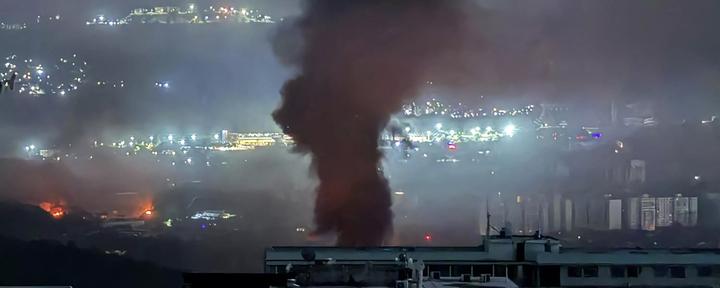
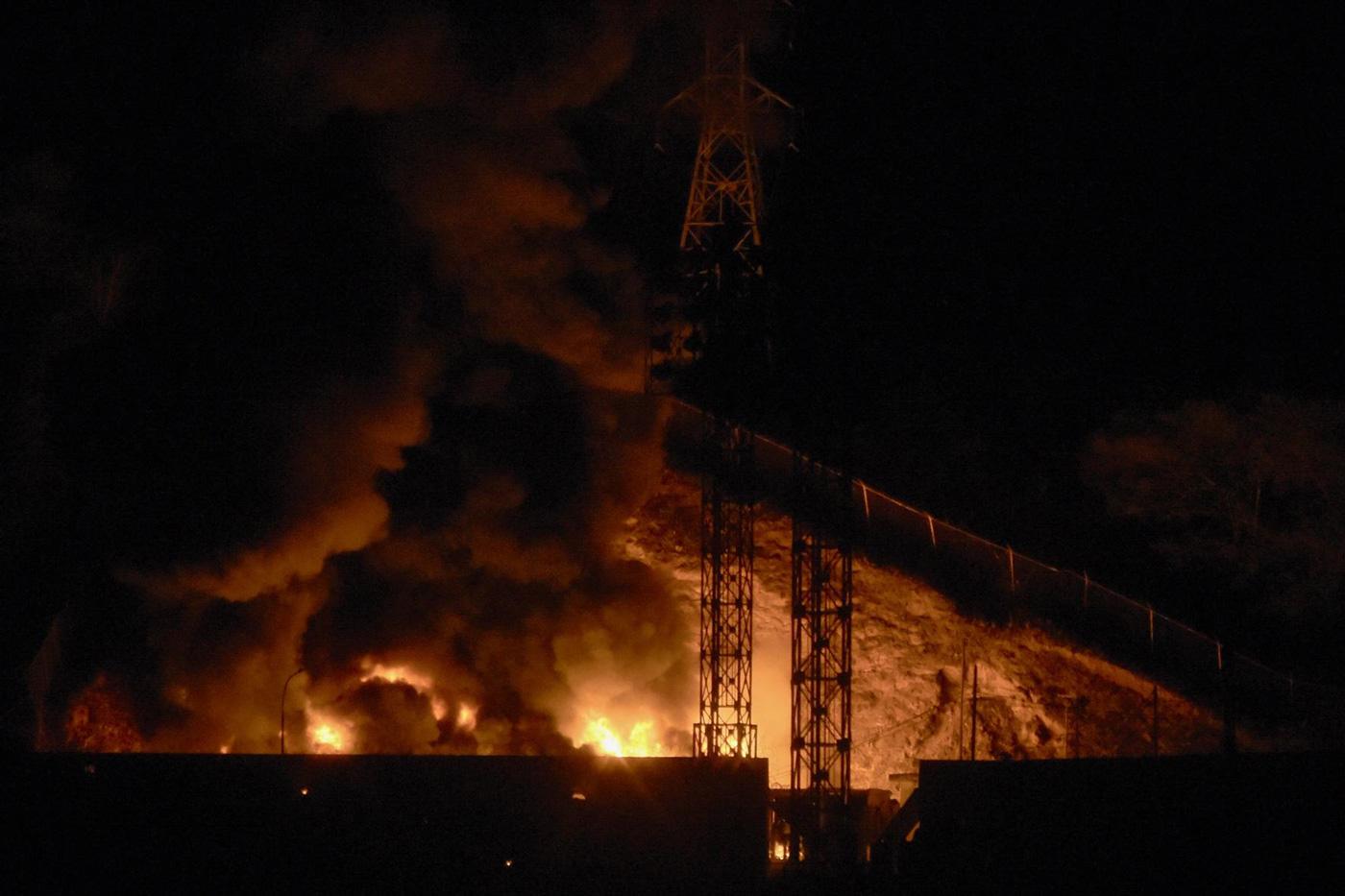
<figcaption>
Fire at Fuerte Tiuna military complex in Venezuela, January 3, 2026.
</figcaption>
<hr>
The Playbook
The United States government has a long history of imperialist
interventions in Latin America, including over a century of operations
against Cuba, the bloody military coup in Chile in 1973, and George
Bush’s invasion of Panama in 1989. The attack on Venezuela picks up
where a series of more recent endeavors left off, from George W. Bush’s
invasions of Afghanistan and Iraq in 2002 and 2003 to Joe Biden’s
dismantling of the international “rules-based order” to enable Benjamin
Netanyahu to carry out genocide in Palestine starting in 2023.
At the same time, the program of the Trump administration represents a
departure from previous norms. In seeking to carry out resource
extraction by brute force without the slightest pretense of any other
agenda, Trump joins Vladimir Putin and Benjamin Netanyahu in
inaugurating an era of naked rapacity for its own sake.
While Trump’s underlings have cited the rigged elections that took
place in Venezuela in 2024 to justify the attack, Trump is not
pretending to bring elections or “democracy” to Venezuela. Some sources
claim that the opposition led by María Corina Machado is supported by
nearly 80% of the Venezuelan population, but Trump maintains that they
do not have enough support to rule; presumably, he means that they lack
the support of the military. Trump himself would prefer to work with an
autocratic regime that is beholden directly to him. He, too, would
rather not answer to elections, whether in Venezuela or the United
States.
Trump is using war to stave off domestic crisis. While Trump and a contingent of anti-communist republicans
have long pressed for regime change and the naval buildup in the
Caribbean has been growing since August, this coup is timed to seize the
media cycle in order to distract from worsening polls and a series of
court losses regarding Trump’s efforts to deploy the National Guard. At
the same time, evidence of Trump’s complicity in Jeffrey Epstein’s
racket of child predation and rape is finally fracturing Trump’s base.
As autocrats lose their hold on power, they become more dangerous and
unpredictable. Netanyahu’s maneuvers to stay ahead of his corruption
scandal—including his readiness to sacrifice hostages in order to
continue perpetrating genocide—are instructive here. When crisis
threatens them, such rulers create additional crises to distract those
they rule. Any effective opposition should remember to keep the
spotlight on what Trump is trying to conceal. That is what he fears
most.
Understood as a media operation, the attack on Venezuela is an attack
on all of us: an effort to intimidate everyone who might resist the
Trump regime, to make us accept that state violence will continue
escalating whatever we do, to convince us that we are not the
protagonists of our time.
As we argued
in 2025, Trump has copied much of his playbook from authoritarians like
Vladimir Putin. When Putin became prime minister in August 1999, his
approval ratings were even lower than Trump’s are now. He solved that
problem by means of the second Chechen war, which turned the polls
around dramatically in his favor. Afterwards, every time his support
slumped, he repeated this trick—invading
Georgia in 2008, Crimea and Donbas in 2014, and Ukraine in 2022—slowly
consolidating control of Russian society until he could afford to feed
Russians into the meatgrinder of war a hundred thousand at a time.
Putin has used the war in Ukraine as a means of domestic control—and
in Russia, this goes far beyond suppressing protests. As economic
conditions worsen, Putin has to project strength and brutality
continuously, but he also has to figure out what to do with an
increasingly restless and desperate population. Shoveling young men from
poor families in the hinterlands into the maw of war enables Putin to
keep them busy; if a couple hundred thousand of them never return home,
all the better—they will not show up in unemployment statistics and the
police will not have to suppress their protests. Likewise, conscription
has driven those who would likely lead a revolution to flee the country
by the thousands. This is a strategy we shall see repeated elsewhere as
the global crisis of capitalism intensifies.
The chief difference between the two contexts is that, while the
United States is much more powerful than Russia, Trump’s hold on power
is not nearly as secure as Putin’s. At the same time, coming out of the
disastrous occupations of Afghanistan and Iraq, US voters have considerably less stomach for operations that put the lives of US soldiers at risk.
Trump is not an especially disciplined tactician, nor is he a focused
strategist. He always relies on threats and intimidation to achieve his
goals, taking advantage of the cowardice and weakness of his
contemporaries. Presumably, he is gambling that intimidation will serve
to bend the governments of Latin America to his whims without the need
for further military action. If that does not work, he likely intends to
rely on military technology, private mercenaries, and other means of
exerting force without having to send US troops to occupy Venezuela or
other countries. But war, once summoned, imposes its own logic. If the
Trump administration continues down this path, US forces may yet become
embroiled in open conflict.
In the wake of the attack on Venezuela, Trump and his henchmen have threatened to take similar actions targeting Mexico,
Cuba, Colombia, Denmark, and other nations. They will certainly
undertake these if they feel that they are acting from a position of
strength, but even if things go badly for him, Trump may attempt to use
such stunts to distract from his weakness.
<figcaption>
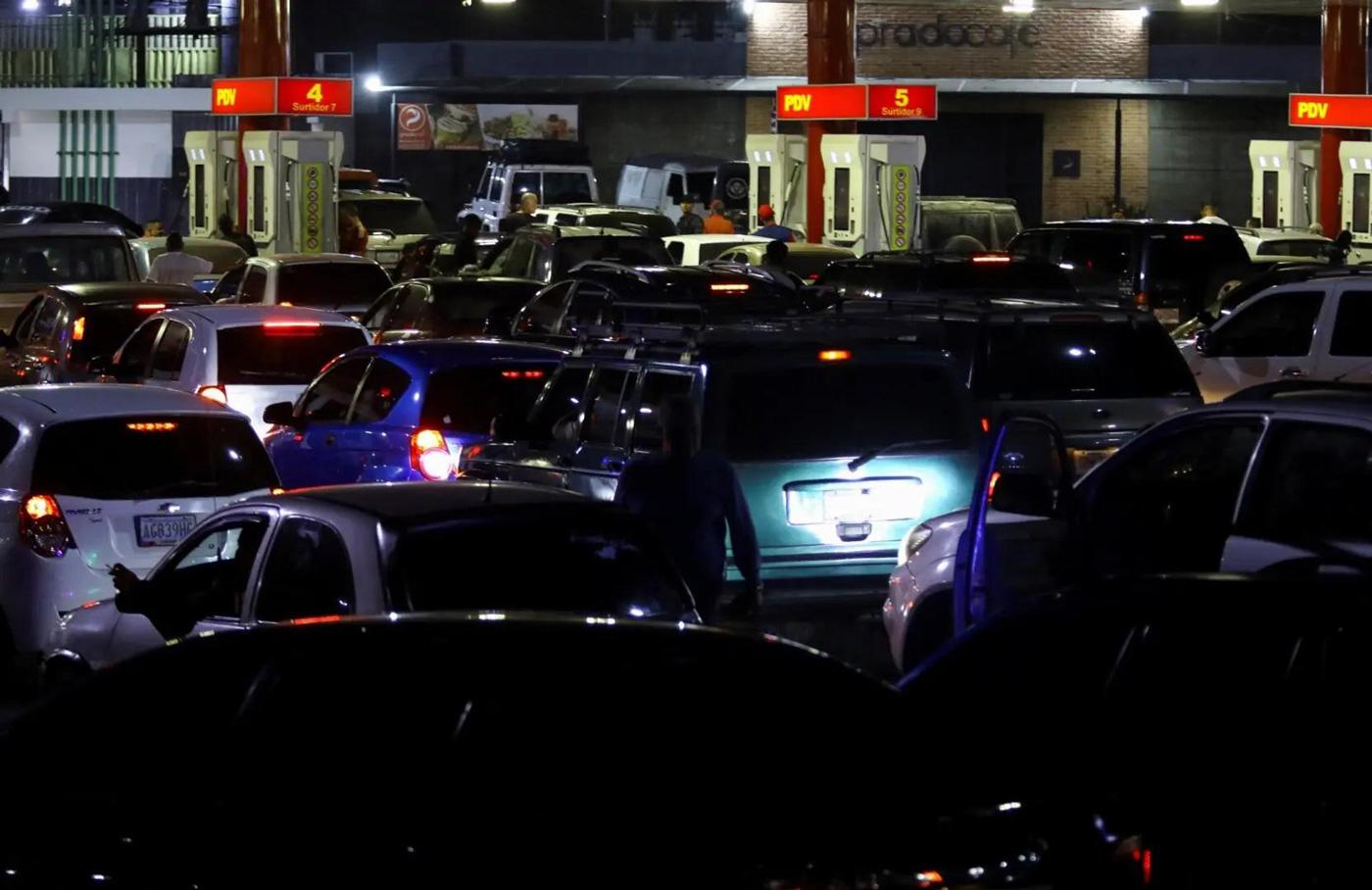
Cars stand in lines for fuel in Venezuela after the attacks.
</figcaption>
<hr>
The Return of Plunder
Capitalism began in the midst of colonial plunder, and as profit
margins decline throughout the global economy, governments are returning
to this old-fashioned strategy of accumulation. This explains Putin’s
land grab in Ukraine, Netanyahu’s ongoing attempt to use genocide as a
form of gentrification, and Trump’s latest adventure in Venezuela.
In a November 2025 “National Security Strategy” paper,
the Trump administration explicitly committed to a “Trump Corollary” to
the Monroe Doctrine, aiming to “restore American preeminence in the
Western Hemisphere” as a means to “deny non-Hemispheric competitors the
ability to position forces or other threatening capabilities, or to own
or control strategically vital assets, in our Hemisphere.”
Trump has embraced the self-aggrandizing renaming of this
geopolitical strategy as the “Donroe Doctrine,” stating that “American
dominance in the Western Hemisphere will never be questioned again.”
This is about oil, as Trump has emphasized—Venezuela contains 17% of the
world’s oil reserves—but it is also a means of jockeying for power with
China, which is a major investor in and importer of the Venezuelan oil
industry, purchasing 80% of Venezuela’s oil exports and propping up
the Venezuelan oil industry with over $60 billion dollars of loans
since 2007. This strategy precedes Trump: a renewal of the Monroe
Doctrine with a focus on competing with China and Russia in the Global
South was a key part of the 2024 Commission on the National Security
Strategy created under the administration of Joe Biden. The 2024
Commission explicitly called for
competing with China and Russia for leverage in Latin America with
regard to the “development and harvesting of natural resources, and
facilities and capabilities for projecting power.” While Trump
represents the turn towards autocracy, the geopolitical and economic
rationale was already in place.
In other words, Trump’s heavy-handed brutality offers the ruling
class a solution to a problem that capitalists of all stripes are
confronting—the problem of evaporating opportunities.
Trump’s plan to have US oil companies take over resource extraction
in Venezuela is part of a new phase of colonial plunder, a return to
directly seizing assets from other countries. We have to understand this
within the larger context of stagnation and financialization.
Historically, this mirrors earlier periods of “systemic chaos,” 1
when declining profits compelled capitalists to pivot towards financial
speculation and the machinery of the capitalist world system struggled
until it was reconstituted into a new order through mass violence. The
most relevant recent example is the period from 1914 to 1945, which saw
both of the 20th century’s world wars.
So this is not just about oil; it is a means of shoring up
the conditions for capitalist profiteering in general, and a glimpse of
larger-scale violence to come. We are entering a phase of relations
based in pure force, not “rule of law” or diplomacy, and this
attack—like Trump’s presidency itself—is a symptom, not a cause.
But this represents a departure from the nationalist and populist
imperialism of the past, in which regimes stole resources from the
global periphery in order to improve the quality of life in the imperial
core. Trump’s assault on Venezuela is calculated to benefit an
increasingly small cadre of capitalists. The middle class and white
working class are no longer “junior partners” to colonial ventures, and
have increasingly less cause to identify with them.
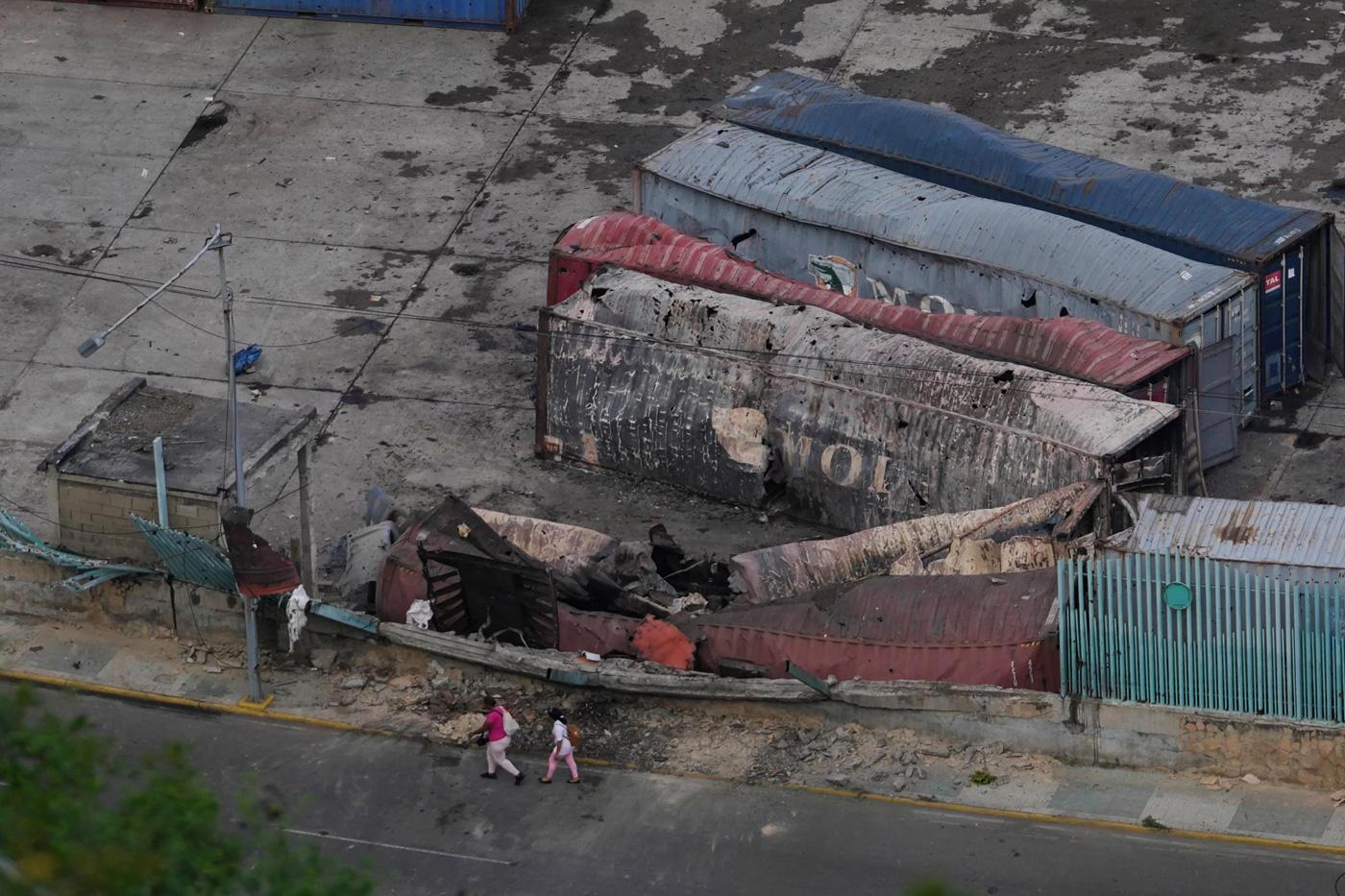
<figcaption>
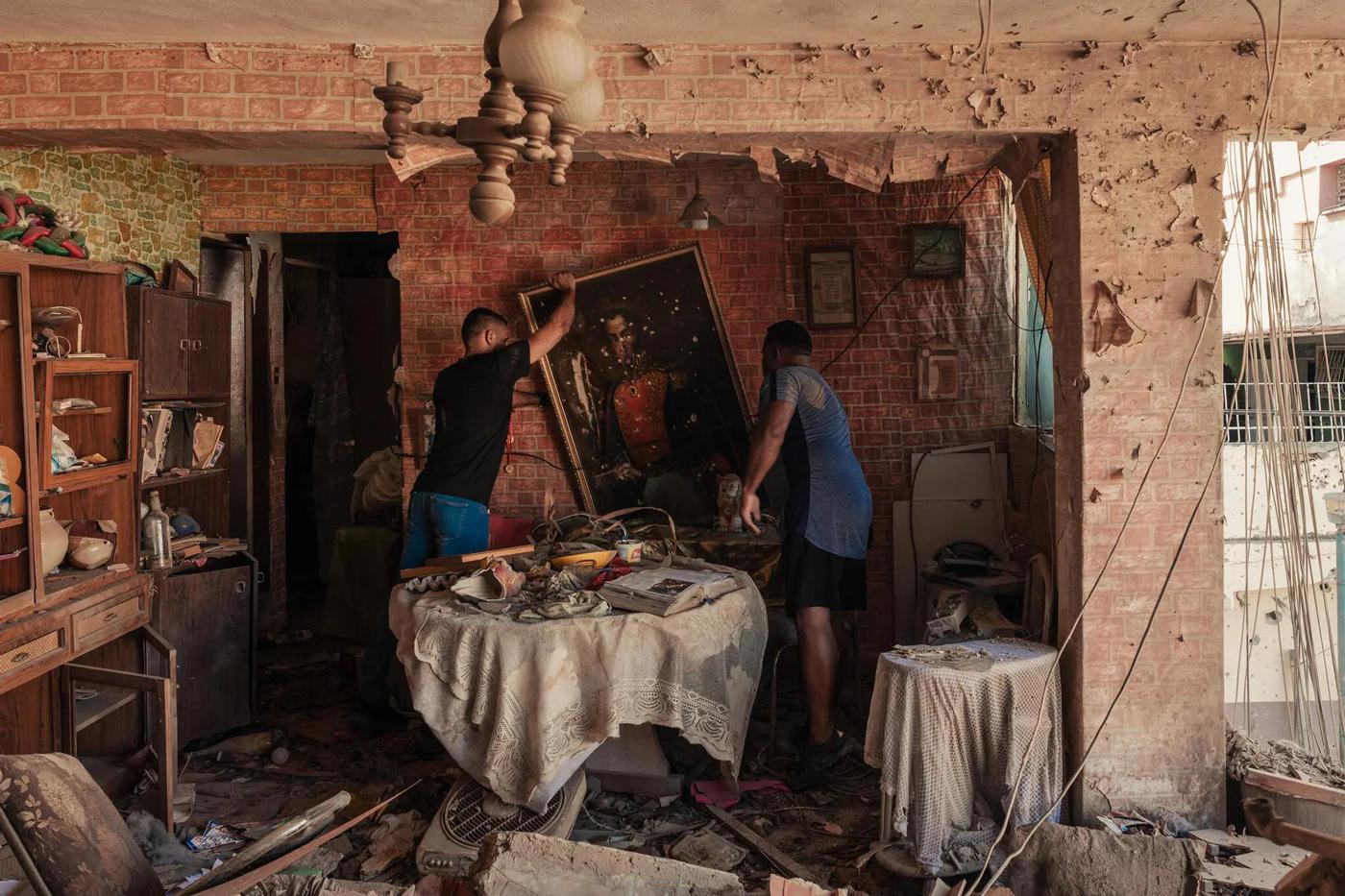
People in Caracas clean up after the United States bombings.
</figcaption>
<hr>
The Question of Leadership
At first, Venezuelan vice president Delcy Rodríguez struck a defiant tone, but she immediately backpedaled to more conciliatory rhetoric. This has prompted speculation that Rodríguez might be prepared to cooperate with the Trump regime, or already cooperating.
A variety of scenarios are possible, and it is difficult to determine
the truth. Perhaps the United States has put Delcy Rodríguez in a
terrifying situation, but she is bearing up bravely; perhaps the Trump
regime has already negotiated secretly with Delcy Rodríguez, and she
intends to talk tough while facilitating the US agenda of resource
extraction; perhaps something else is going on. Regardless, the
vulnerability of Chavismo2
to the kidnapping of its leader—and the possibility that Rodríguez or
other elements of the Venezuelan government are complicit, or will
become complicit, in Trump’s plan to take control of Venezuelan
resources—both underscore the fact that all hierarchies represent a point of failure for liberation struggles.
We have already seen how the leadership of previous revolutionary left movements, such as the government of Daniel Ortega in Nicaragua,
has been forcibly integrated into the functioning of neoliberalism and
compelled to impose capitalist austerity measures and state control on
the populations under their rule. Confronted with these defeats, some
people draw the conclusion that the only way to possess sovereignty is
to control a powerful nation state that possesses nuclear weapons. This
is the logic underpinning “campism,” the support for imperial powers like Russia and China that rival the United States.
Yet Russia and China operate according to the same authoritarian,
capitalist logic that the United States government does today—and those
who choose to support them will have no more leverage over the actions
of their leaders than Venezuelans do over the United States government.
Those who seek to align themselves with one geopolitical state actor or
another will inevitably end up defending genocidal autocrats from a
position of total powerlessness. The real alternative is not campism,
but an international grassroots resistance that extends across borders.
But for that to become a persuasive alternative, people in the United
States will have to develop the capacity to prevent the US government
from overseas bombing and looting.
The attack on Venezuela marks the escalation of a proxy war with
China. Shifting the industrial base, including the tech industry, into wartime industry
is one way to deal with the stagnating economy, but this will only be
possible if the Trump administration can whip up more “national spirit”
and patriotism. Arguably, the rush to consolidate the funding and
proliferation of artificial intelligence is intended to create a more
credulous and controllable population towards that eventual purpose.
In the nearer term, we can expect to see the Trump administration
attempt once more to use the Alien Enemies Act against Venezuelans and
other targets. Trump’s and Miller’s previous attempt was defeated in
court because the US was not, in fact, at war. Now that they have
created a war, they will use this to declare a range of additional
emergencies and justify additional clampdowns. We can also expect more
racist violence against Latin American and Chinese people, as well as
retaliation against US foreign policy from non-state actors or proxy
actors, which the Trump administration will seek to take advantage of to
advance its agenda.
The midterm elections are scheduled for November 2026. Donald Trump
and the Republicans are not favored; but Trump has crossed so many red
lines already that he cannot tolerate any threat to his power. Whether
by election interference, fraud, or, more likely, engineered crises that
legitimize a state of exception, we can expect the midterms to be the
least “democratic” elections in recent memory. Elections alone will not get us out of this mess.
As Trump is beset by various crises, scandals, and obstacles, he will
become more violent, unpredictable, and dangerous. This is a sign of
weakness, but it is a weakness that is backed up by the full strength of
the US military. We should expect military entanglements on a larger
scale by October of this year, including further National Guard
deployments and perhaps even martial law.
Unpopular wars without a clear mandate—especially wars that result in
US casualties or other sacrifices at home—can spell downfall for a
regime. It is our task to turn this war—along with Trump’s other errors,
and the wars to come—into a millstone around the neck of the entire
ruling class. It will require so much popular force to dislodge Trump
that we should popularize similarly ambitious proposals—not simply
demand a return to an unpopular centrist status quo. Revolutionaries
must prepare to outmaneuver centrist attempts to rebalance the ship of
state. It may seem hard to imagine now, but uprisings and revolutions
unfold quickly. The “Gen Z” revolutions toppled regimes around the world
over the course of 2024.
Demonstrations across the US have used familiar slogans like “No
Blood for Oil.” Unfortunately, Trump has concluded that his followers
want both—oil and blood. Anti-war movements tend to be inherently
conservative, as they seek to influence state policy; but like the
administrations before it, the Trump regime has made clear that it is
not concerned about opposition. Rather than presenting demands through
symbolic protests, we need to build horizontal movements capable of
addressing needs through direct action. These should focus on the common
conditions that ordinary people face from Caracas to Minneapolis:
poverty, austerity, the pillaging of essential resources, control by
violent mercenaries, rule by unaccountable tycoons. The resistance to Immigration and Customs Enforcement activity around the United States represents a promising step towards this.
If, indeed, as Stephen Miller implies, governments do not represent
the desires or agency of the people they rule over, if—as should now be
obvious to all—they do not have our best interests at heart but simply
act to seize as much wealth for themselves as they can, then no one is
obligated to obey them. The only question is how to build up enough
collective strength—enough grassroots force, enough horizontal power—to defeat them.
<figcaption>
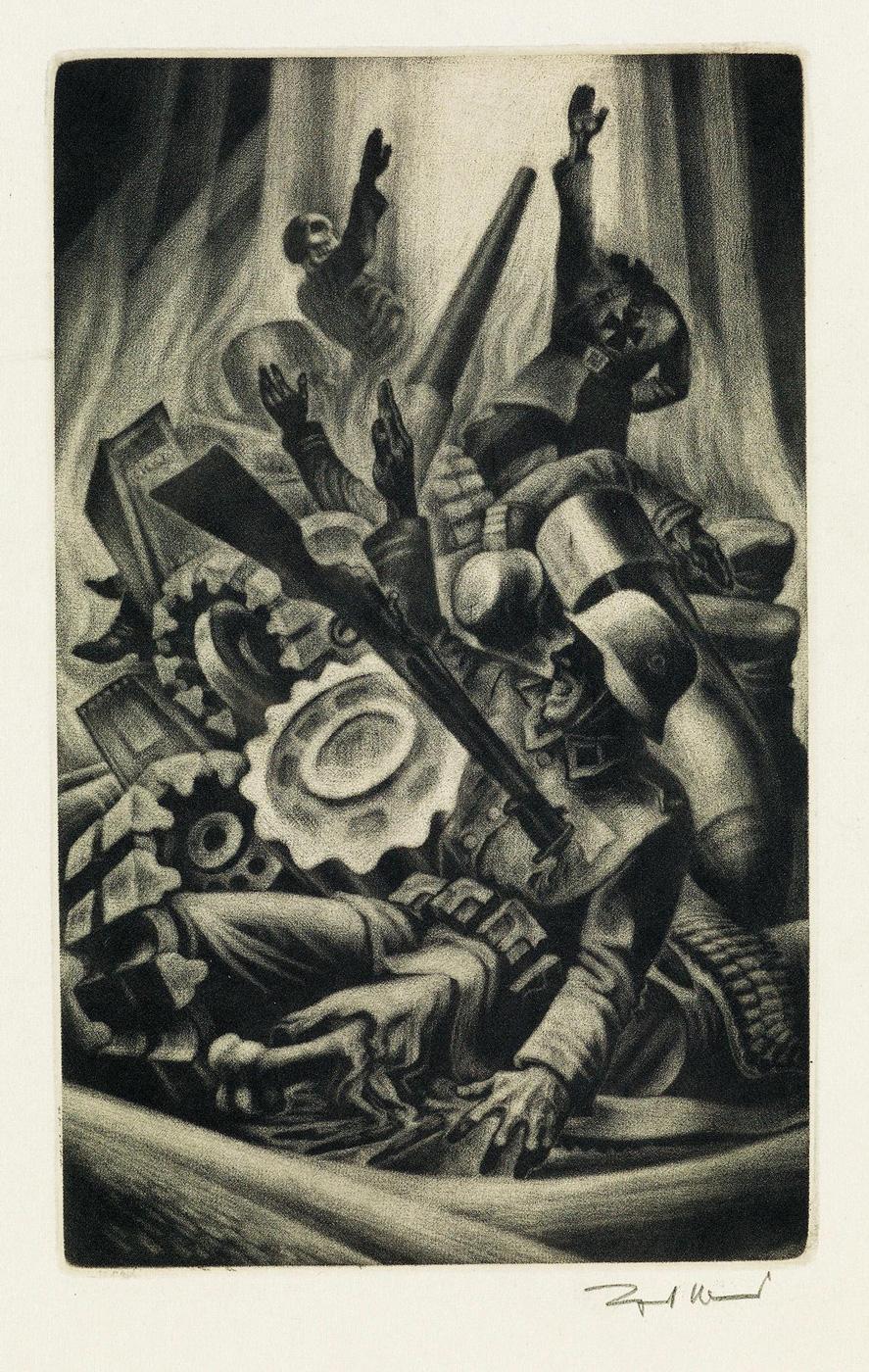
The return of fascism on a global scale—and hopefully, the capability to defeat it.
For deeper background on the situation in Venezuela, we encourage Spanish-speaking readers to peruse the archive of the now-defunct Venezuelan anarchist publication El Libertario, where one can find, for example, a critical evaluation of the Bolivarian social organizations from 2006, or a collection
of texts about the role of the petroleum industry in subduing
grassroots popular movements in Venezuela and integrating them into the
global economy:
“Venezuela is part of the process of building new forms of
governance in the region, which have demobilized the social movements
that responded to the application of structural adjustment measures in
the 1990s, re-legitimizing both the state and representative democracy
in order to meet export quotas for natural resources to the chief
markets of the world.”
-Ley Habilitante: dictadura para el capital energético (“The
Enabling Law: Dictatorship for Energy Capital) in El Libertario # 62,
March-April 2011
We could understand Trump’s attack on Venezuela as a way of
continuing that “process of building new forms of governance in the
region” today.
<figcaption>
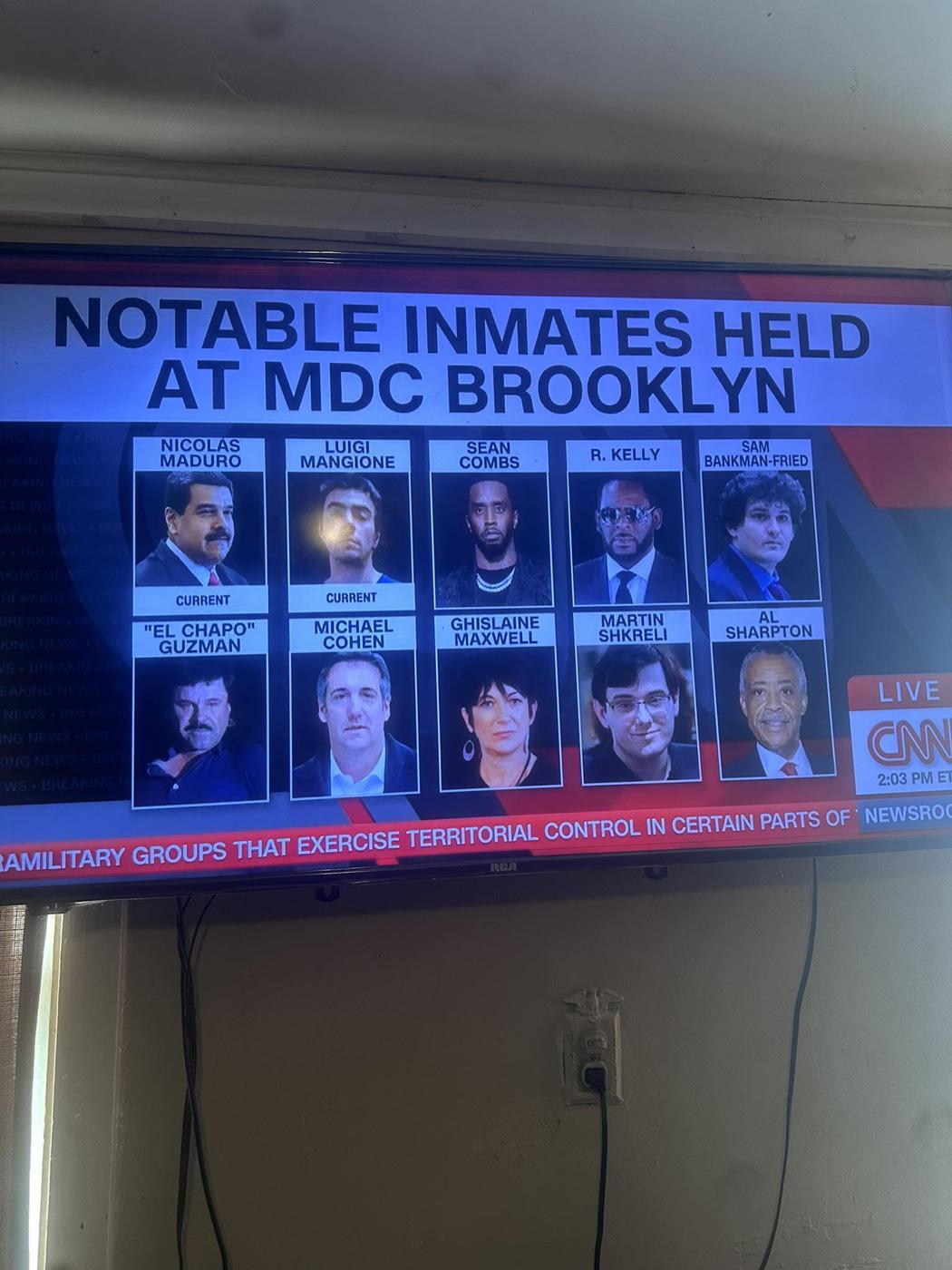
A list of those who have recently been incarcerated at a single
detention center in Brooklyn hints at the increasing array of
world-historical contradictions coming to the fore in our time.
</figcaption>
In The Long Twentieth Century, Giovanni Arrighi argues
that the past 700 years have witnessed a predictable pendulum swing
between relatively “peaceful” and stable periods of trade expansion,
during which growing markets enable capitalists and states to profit
without significant competition, and investments in production or trade
generate reliable profits, and increasingly chaotic periods of financial
expansion, during which inter-capitalist competition drives down
profits and investment capital seeks profit primarily through financial
speculation. As the global economy stops growing, capitalists and
national elites increasingly turn towards force and plunder to sustain
profits, culminating in periods of “systemic chaos.”
These periods are remarkably violent, characterized by military
expenditures and plunder; historically, they only end when a new
hegemonic force imposes a new global order and restores the conditions
for capitalist accumulation. 20th-century American hegemony and the
international system introduced by the United Nations played that role
after the Second World War, but both have been in decline since the
shift towards financialization and the rise of “neoliberalism” in the
1970s, and are now displaying their irrelevance as more and more forces
attempt to seize profits by pure force instead of capitalist investment.
Pundits bemoaning the end of the international rules-based order and expressing nostalgia for the United Nations are missing the forest of economic stagnation
for the trees of individual bad actors like Trump and Putin. Any real
resolution to the period of barbarism that we are entering will have to
be grander in scope and more ambitious than the “Age of Revolution” of
1789-1848. ↩
Chavismo is the socialist movement associated with former Venezuelan president Hugo Chávez.
I sak riktigt men jag är ändå förvånad att de latinamerikanska anarkisterna utgår från att Maduro är den ende ledaren. Mannen som även har låst in även vänsterfolk som syndikalister och andra fackliga organisatörer.
Lenin stal den ryska revolutionen år 1917 från det ryska folket och Maduro (och föregångaren) stal den Venezuelanska folkets folkmakt och ersatte denna med sig själv. Typisk Leninism!
Hela vänstern paralyseras av att den högsta ledaren plockas bort. Det är inte anarkism på något sätt.
Den Venezuelanska senaten borde omedelbart ha avskedat Maduro från alla sina uppdrag så USA bara hade haft en vanlig människa inom lås och bom.
ANARKISM ÄR KAMP MOT ALLA FORMER AV FÖRTRYCK OCH HIERARKIER - och toppstyre.
Nu går milisen omkring och tvångs kontrollerar folks Smartphones om de inte bara har hyllningar till den nu föredetta älskade ledaren. Texten är Leninistisk vilket inte är fel om man är marxist-leninist.
165 60
Kommentera
Senaste Media
Norman Finkelstein: "Why I won't condemn Hamas"
Robota Sweden | Tempo Dokumentärfestival 2026
BELKI SIBE (DOCUMENTARY) : A Journey Through the Syrian War and Rojava Revolution
 <figcaption>
 <figcaption>
 <figcaption>
 <figcaption>
 <figcaption>
 <figcaption>

 Feed
Feed